
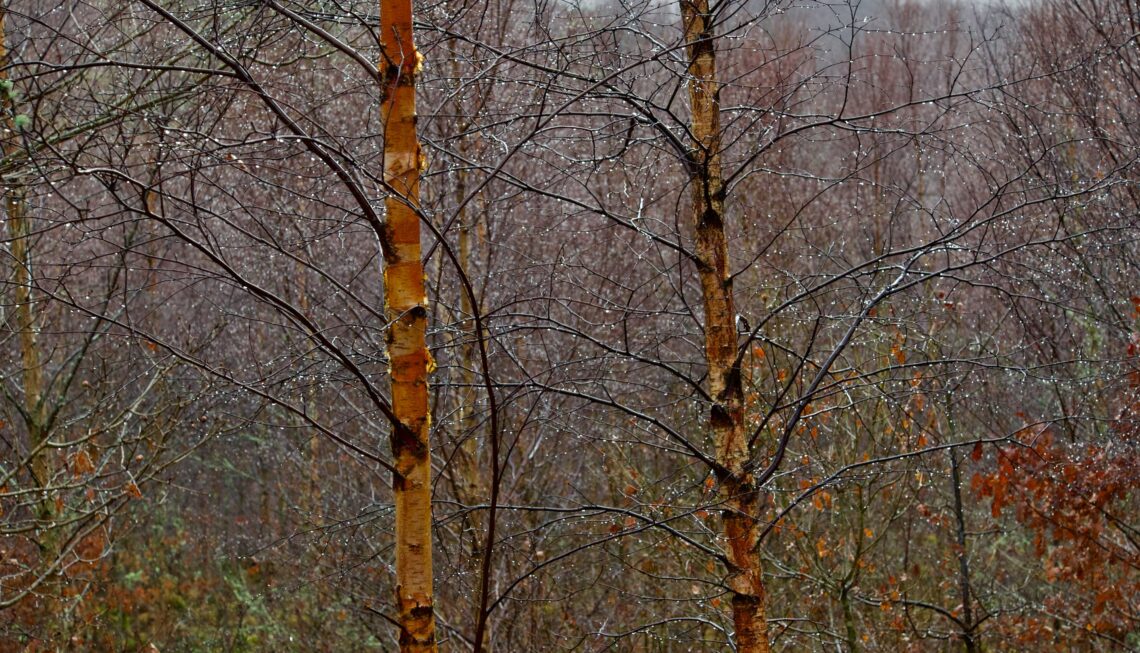
Winter trees in Glen Roy
A trip up into Glen Roy in the middle of winter was always going to be quite ambitious, but there was no snow on the ground, the temperatures were mild, and a fine day was forecast.
So much for best-laid plans…. it was raining hard by the time we reached Fort William, it carried on all the way through Spean Bridge, and it hadn’t stopped when we turned onto the single-track road into Glen Roy. There was no sign of it blowing over, so at the foot of the glen we found somewhere to park and eat our lunch.
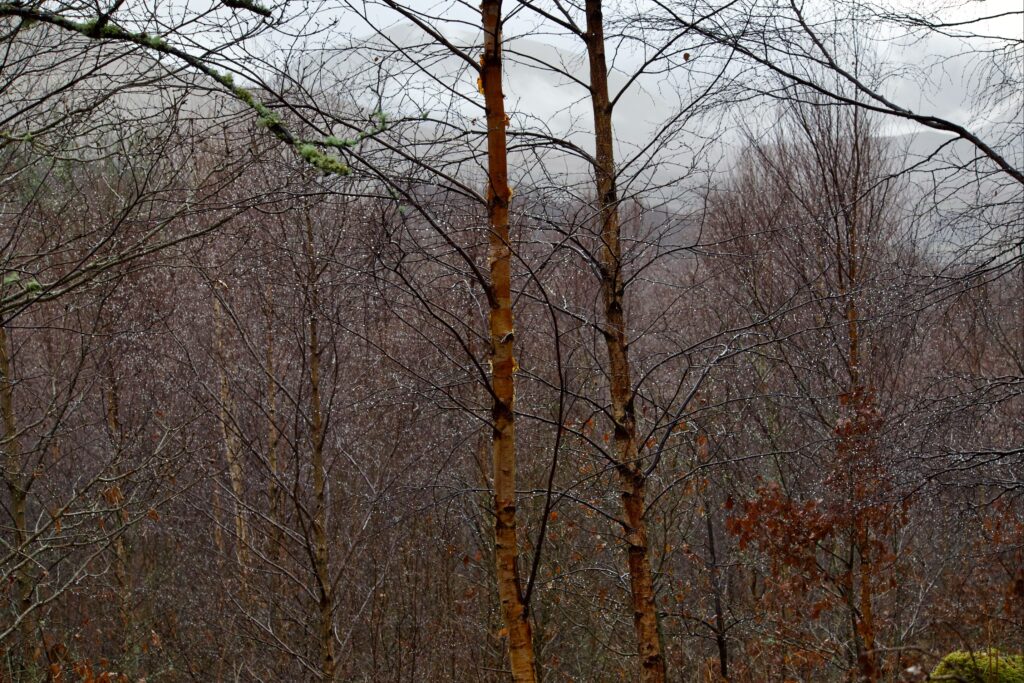
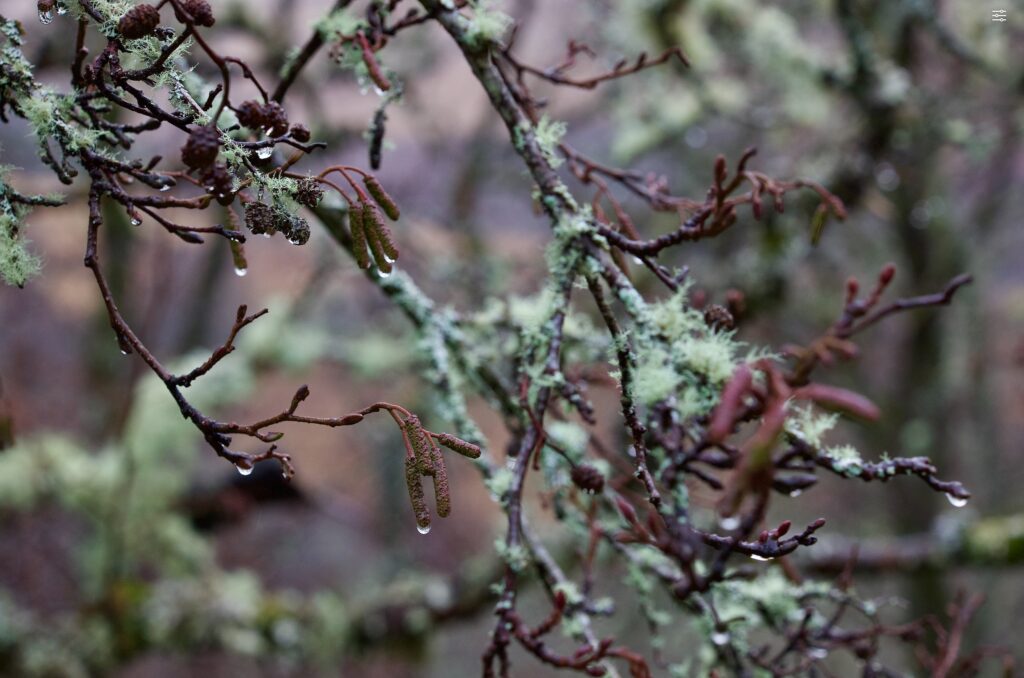
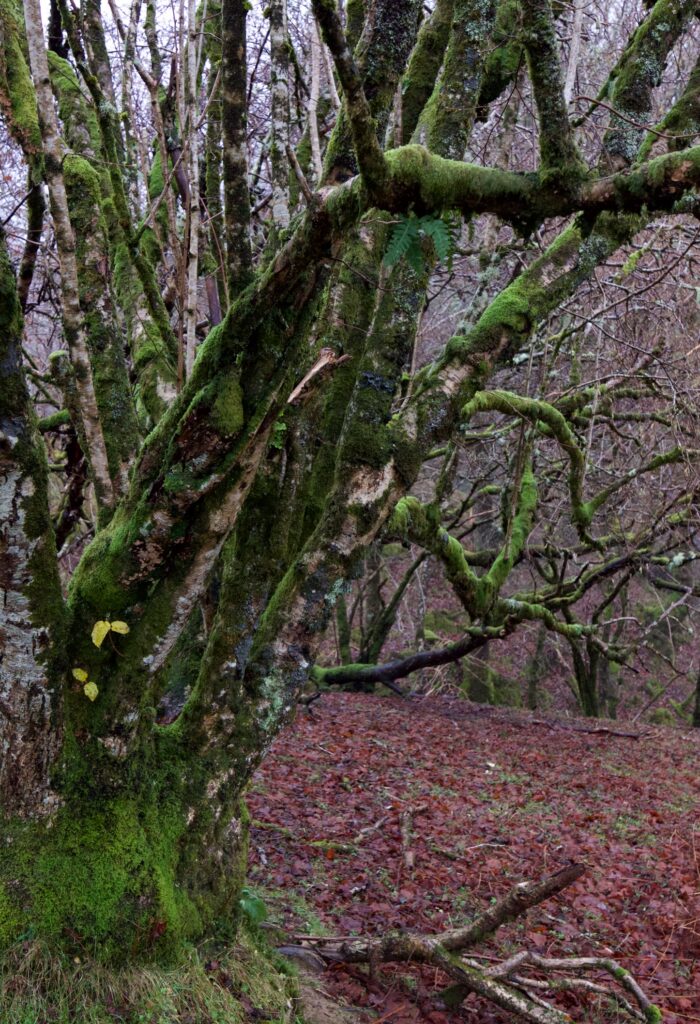
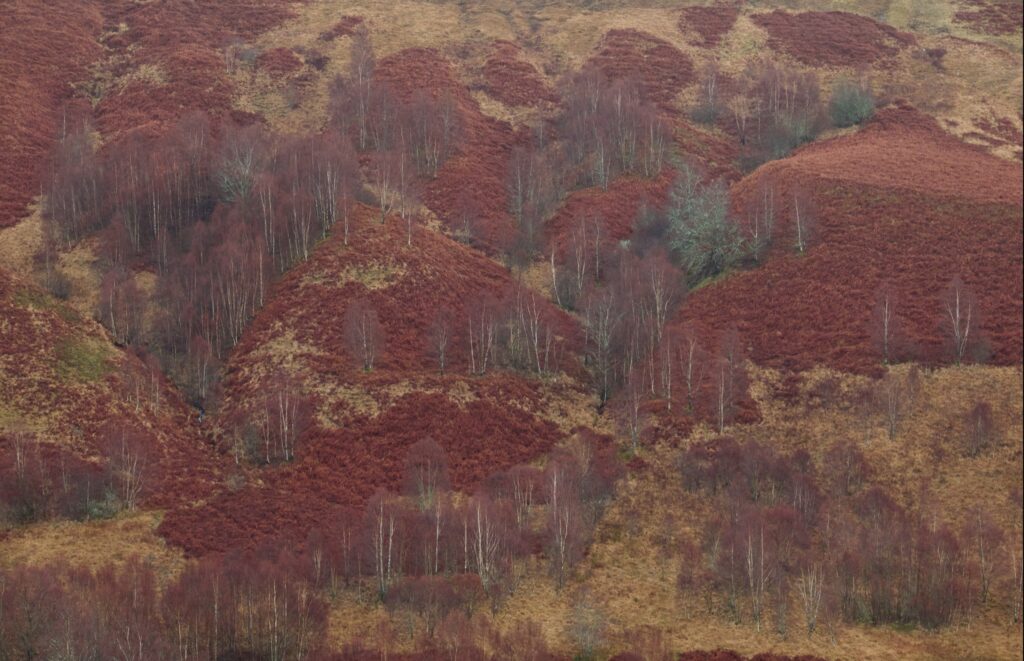
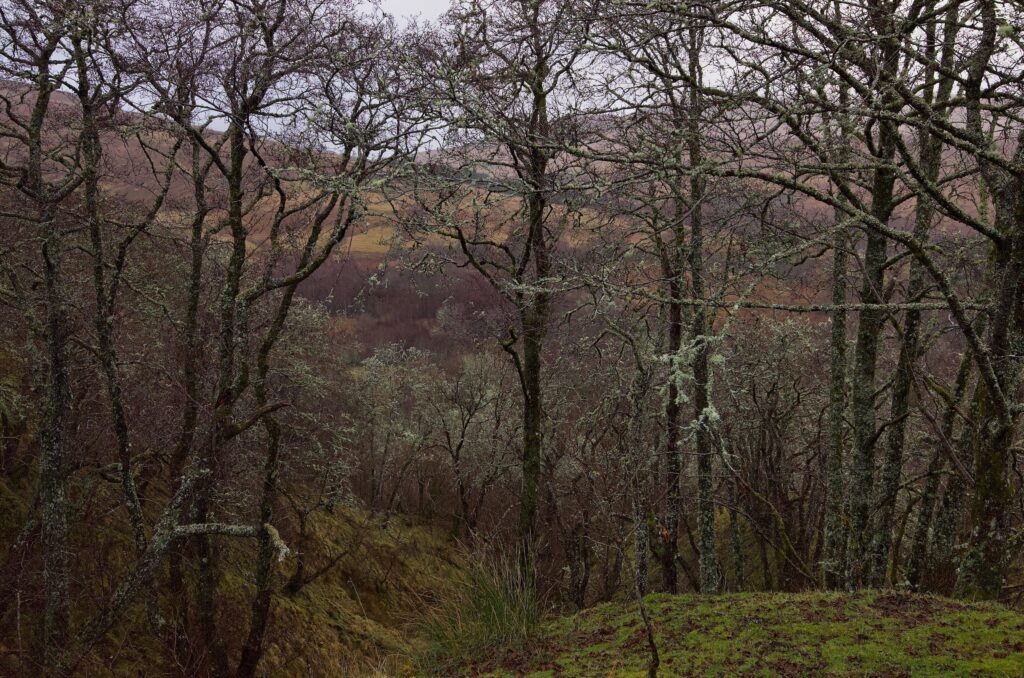
There are days, even in the gloom of December, when colours seem to glow, and this was one of those days. Stripped back to its bones, the landscape took on a new and subtle beauty in a winter palette of maroon and burgundy, chestnut and russet, and luminous silvery grey. Over the dark, delicately branching arms of birch trees the rain had thrown a shawl of softly gleaming droplets. Elsewhere, on the more gnarled stems of alder, mint-green tendrils of lichen curled around cones and catkins, and vivid emerald mosses cushioned the boles of oak and hazel.
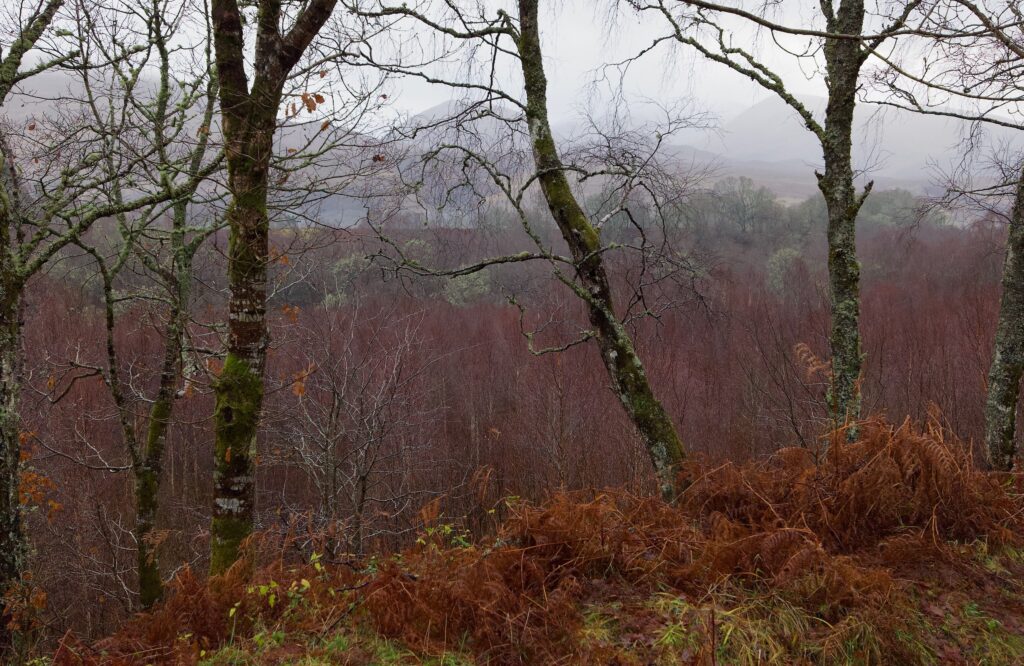
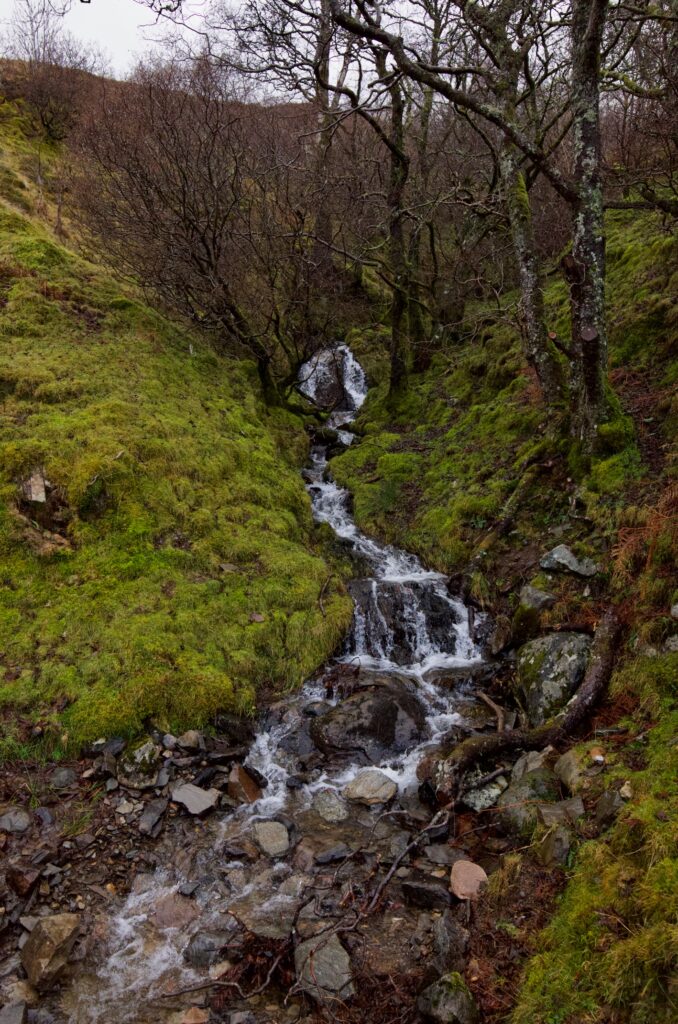
The road ascends the glen via a series of narrow bridges and hairpin bends. All the burns were briskly funnelling water down from the high tops. Some smaller torrents, unable to find their way to the burns, were finding new and more direct paths through the heather, and bringing a scatter of stones down with them in their haste. The flatter ground, where once it might have been merely wet underfoot, was now a deep and extensive bog.
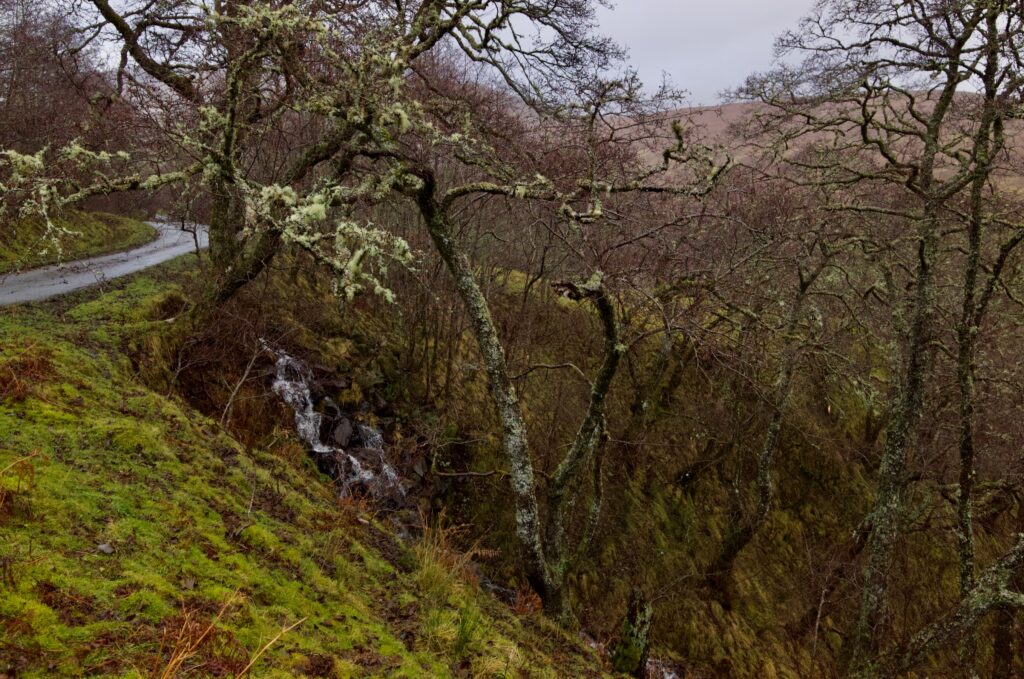
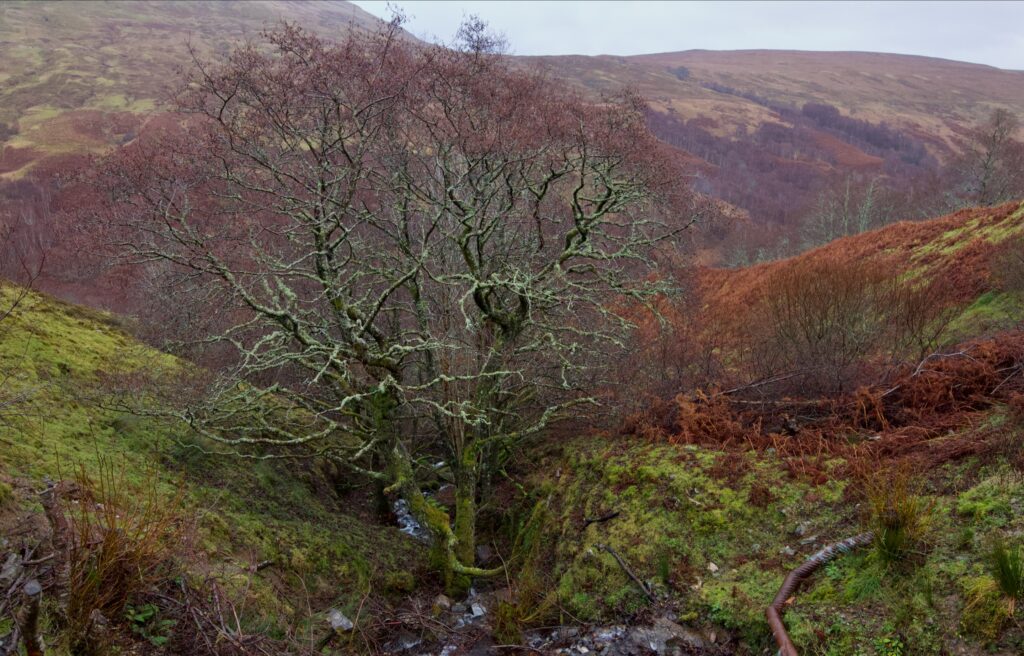
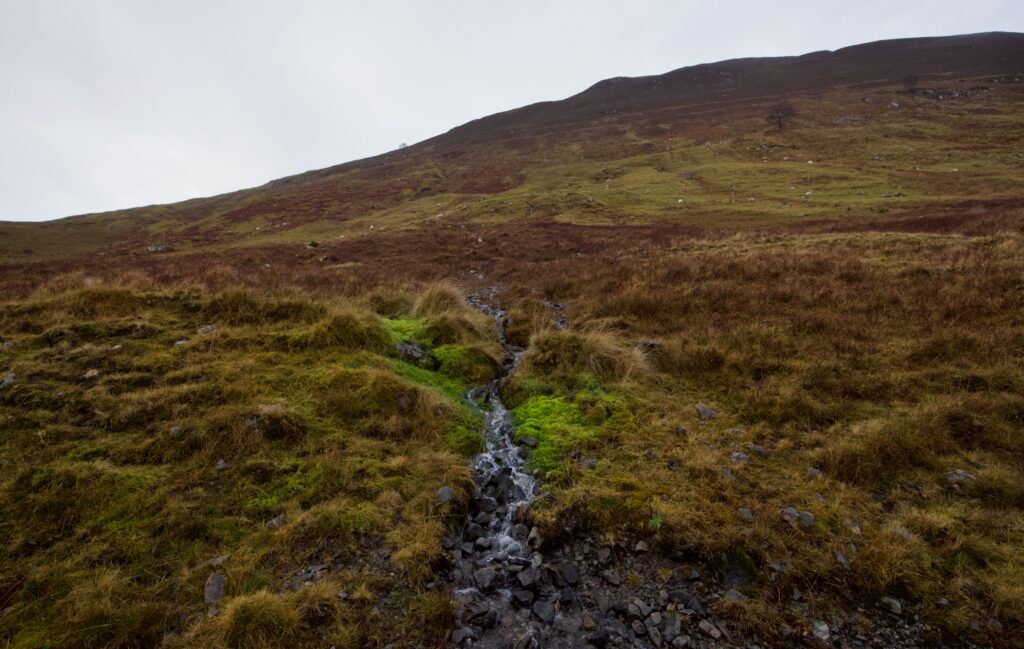
Glen Roy is remarkable for its ‘parallel roads’ – straight lines that run like contours along the slopes, relics of an ice-dammed lake which burst at the end of the last Ice Age. These extraordinary landmarks stood out as lighter scars on the rough brown skin of bracken and heather. With increased altitude most of the trees disappear, apart from the odd solitary bushes that might be rowans or thorns; lower down, on the far side of the glen, ranks of silver birches rose like slender candles with magenta flames, while sturdier oaks and alders were encrusted from top to toe in lichen.
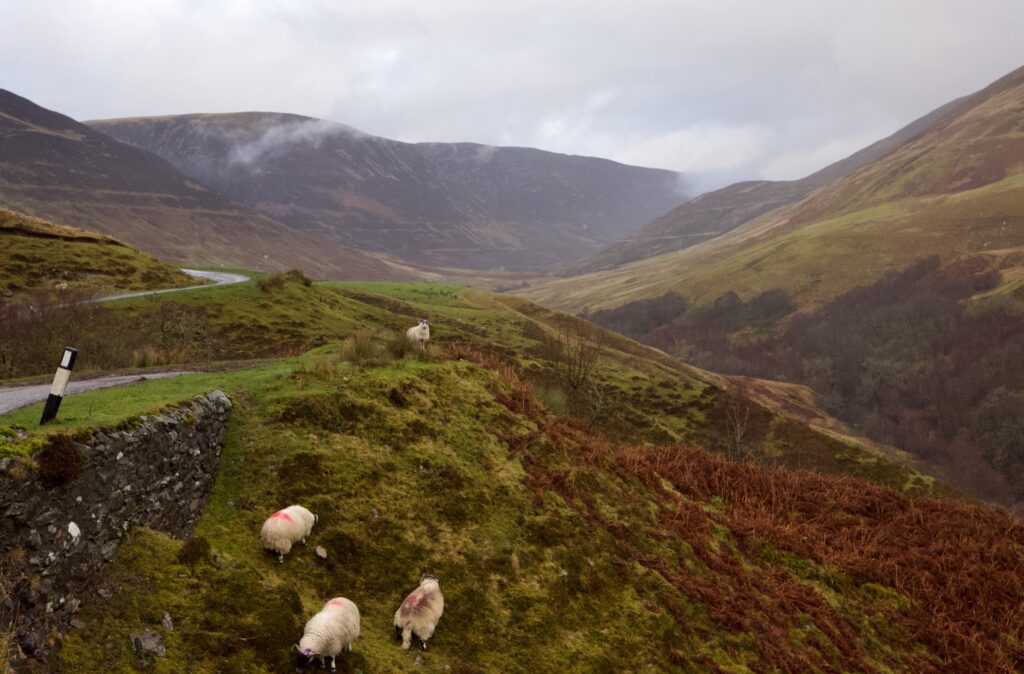
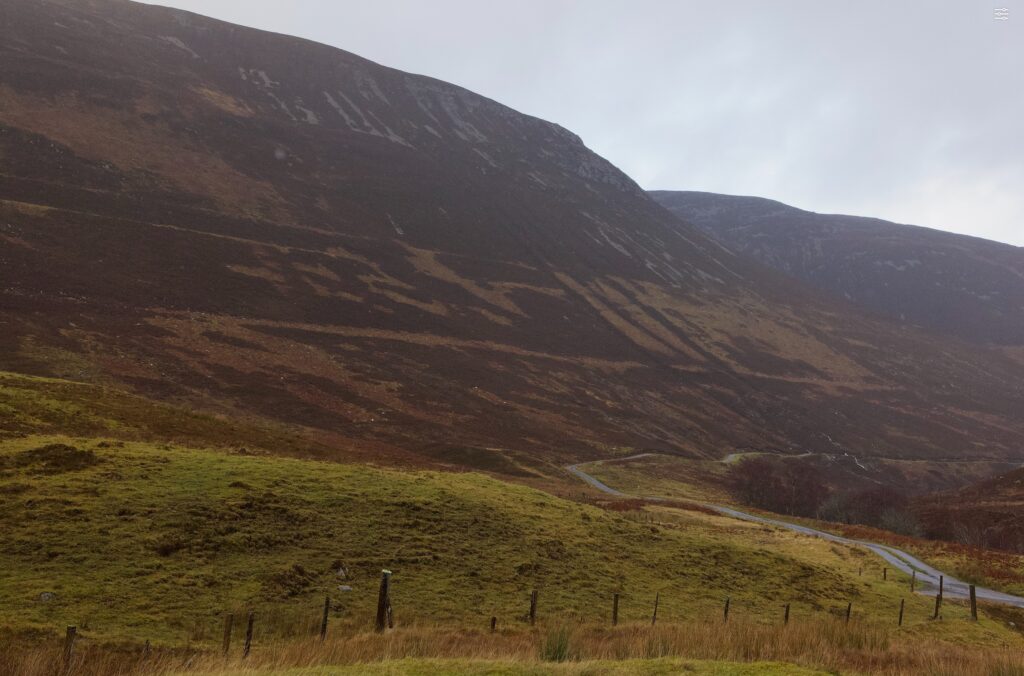
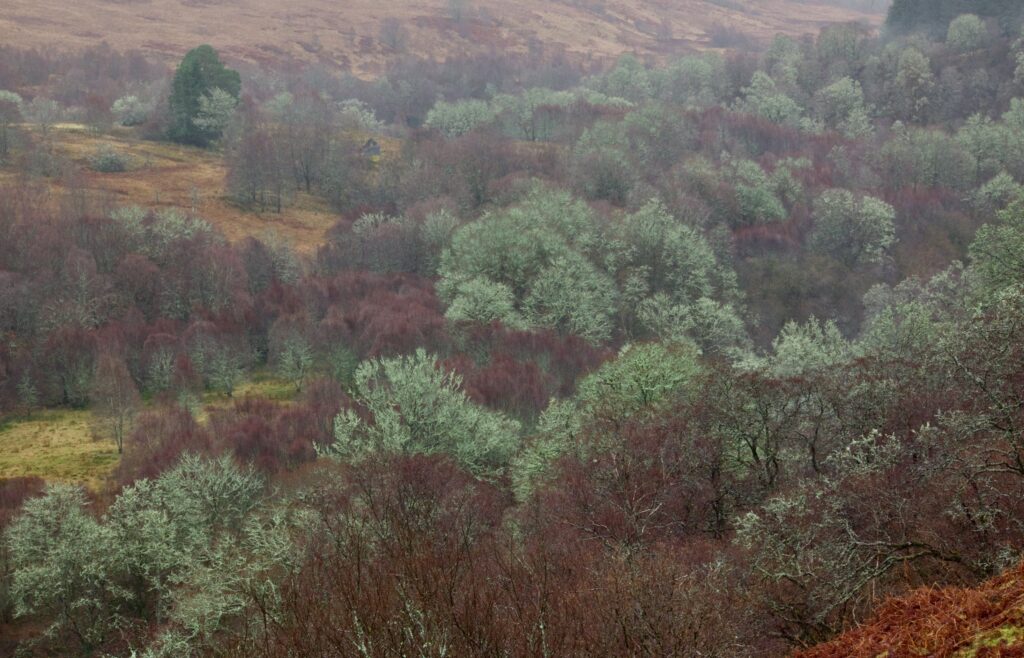
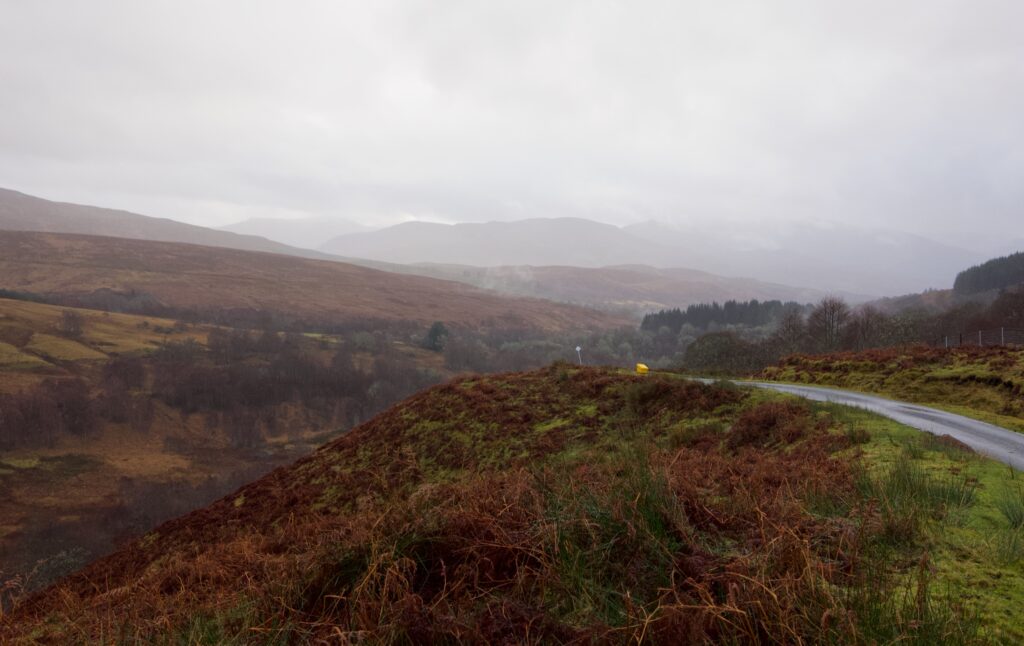
I’d left my waterproof trousers at home, but in fact even full waterproofs and wellies wouldn’t have been much defence against this kind of weather. If Fionn mac Cumhaill and his huntsmen were riding out along the parallel roads, as they’re reputed to do, no one would have seen them pass. And if Fionn was ever going to encounter the deer hind that turned out to be his lover, Sadbh, under a druid’s spell, he could easily be doing so today, when the hard lines of everything were softened and blurred.
Six or seven jays swooped together into a big old oak tree below us and leapt from one branch to another with flashes of black and white wing feathers. A ragged scrap of blue sky showed itself for an optimistic moment but was quickly extinguished. Mist started to roll in. It was only about two o’clock, but daylight was on the wane.
Back in the woods that hug the foot of the glen, we noticed that some of the hazel catkins had a look about them as if they were ready to come out… and a bit further on, we were delighted to find a small, otherwise inconspicuous hazel tree that was proudly decked with fully open catkins. Her low branches overhung a mossed and secluded woodland floor, so deep in wet leaves that our feet sank into it without a sound.
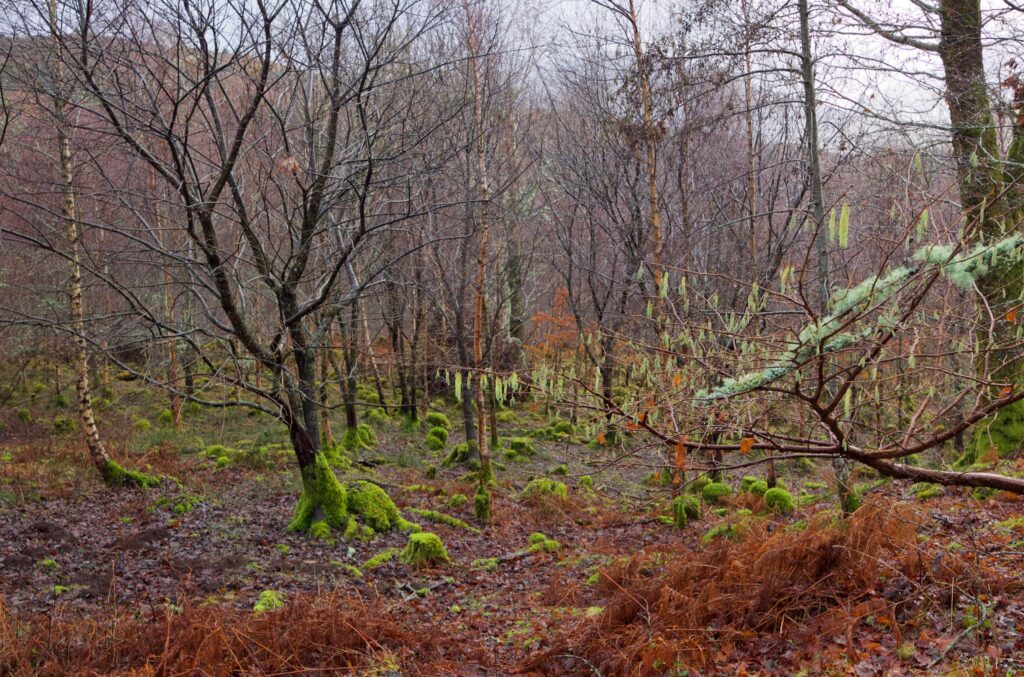
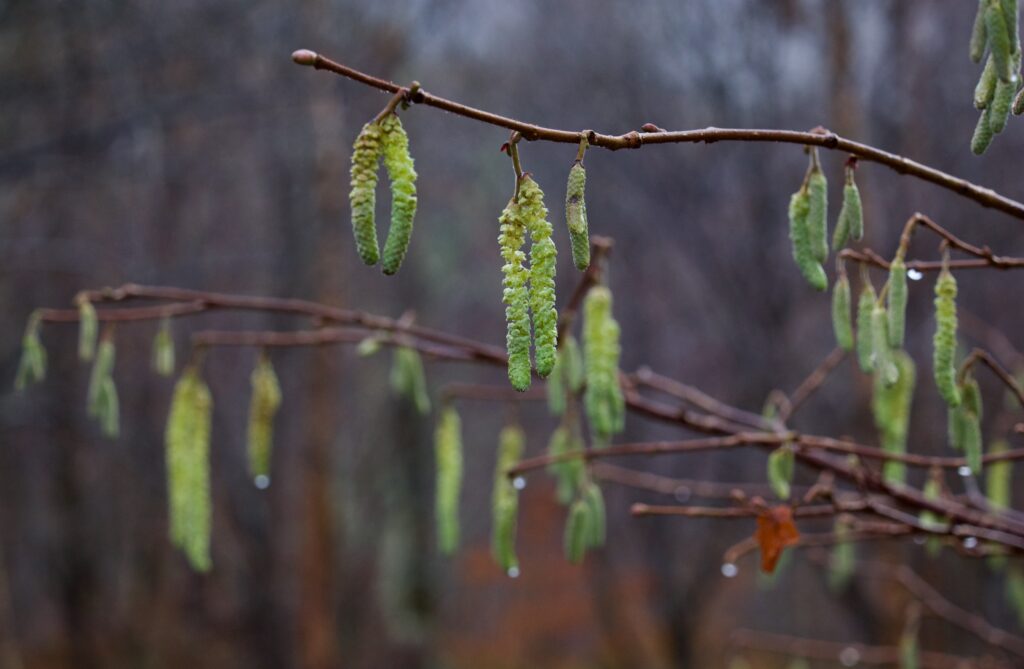
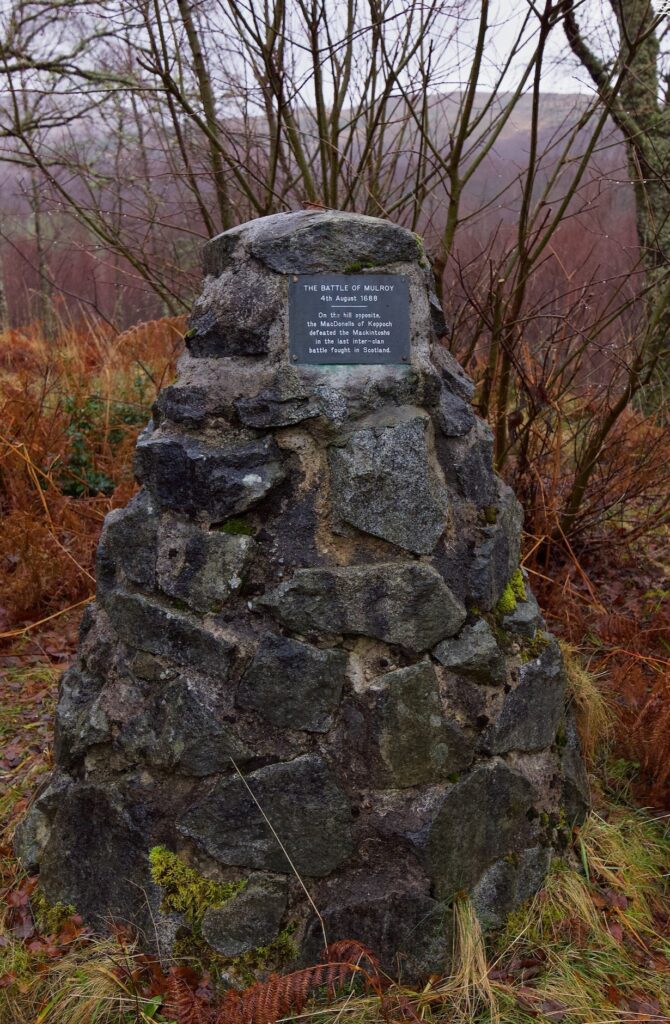
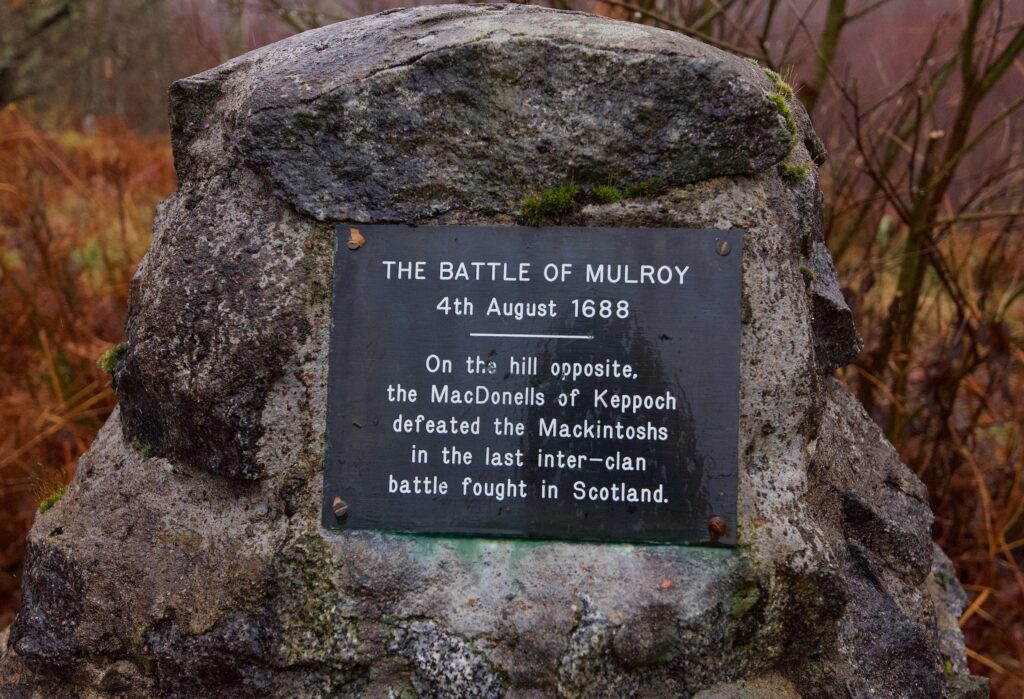
A memorial cairn stands by the roadside, and I went over to read the plaque. It was erected to commemorate the Battle of Mulroy, which is said to be the last inter-clan battle fought in Scotland, although not all historians agree about that. On 4th August 1688, on a nearby hill called Maol Ruadh or Mulroy, the MacDonells (or MacDonalds) of Keppoch, supported by Camerons and MacMartins, fell upon an opposing army led by Lachlan MacKintosh and his allies from Clan Chattan. A dispute over the possession of land had been brewing since the 15th century, when the Chief of Clan MacKintosh had been granted a charter for traditional MacDonell lands in Glen Roy and Glen Spean, and the MacDonells refused to give it up. At this battle the MacDonells triumphed, but afterwards there were serious repercussions on both sides.
These woods are said to be haunted, not by phantom Highlanders but by the wife of Alexander MacDonell, 5th Chief of Keppoch, who lived in the 15th century. We don’t know her name, only that one day she simply disappeared. She was of Irish descent, and apparently she loved the woodlands here because they reminded her of her homeland.
Southbound on the A82, it felt like evening by mid-afternoon and headlights were already on. The grey, snow-streaked tops of the Nevis range emerged for a few seconds and then retreated miserably into the cloud. Soon it will be the solstice, and light will start creeping back into the days. It’s clear that the hazels can feel it, and they won’t care if it turns cold in the meantime, or if a load more gales blow in from the Atlantic. This is what they do, and maybe we were meant to find them on the dreariest day in December in order to be reminded.
Reference
- Historic Environment Scotland: the Battle of Mulroy
- Brae Lochaber Heritage
- British Geological Survey: Glen Roy parallel roads
Photos copyright Colin and Jo Woolf


10 Comments
Finola
Beautiful piece – words and images in perfect harmony.
Jo Woolf
Thank you so much, Finola. We did enjoy ourselves, despite the weather!
davidoakesimages
That trip took me back and old memories …. but I have to say that I have never had a dry visit to Glen Roy. 🤣
Jo Woolf
Oh no, well that would explain all the lichen anyway! I’m glad it brought back some memories. On our first visit a few years ago I was so stunned by the ‘roads’ that I didn’t take much notice of the woodlands, so it was worth going back, despite the rain.
davidoakesimages
It is rather strange and quieter than many glen. I guess it is the right type of woodland to show off in the rains.
Jo Woolf
I think we were just in the right place at the right time, for the woodlands. We’ve seen red deer there, with stags bellowing in the autumn, but you’re right that it’s quiet – like a kind of backwater. We saw no other cars or people in the glen itself.
Meg Noel
Thank you Jo for painting a wonderful picture with your words. Your writings are very much appreciated.
Jo Woolf
You’re very welcome, Meg, and thank you so much for your lovely comment.
Richard Miles
Thanks Jo,a lovely piece of descriptive writing.Our hazels down here in Dartmoor are also advanced,just a bit behind the one in your photo.I have read about the roads in Glen Roy but I have never been there which is a pity.Have a good Christmas and New Year and keep these interesting posts coming. Richard Miles
Jo Woolf
That’s really kind, Richard – thank you. It’s always good to know my posts are being enjoyed. We were very surprised to see catkins open in Glen Roy, especially because of the altitude, but I think they were in an unusually sheltered position – and of course the weather has been very mild. It would be interesting to know if there are any open in our local hazel wood, Ballachuan. Time for a visit, perhaps. My very best wishes back to you for a lovely Christmas and a very Happy New Year.