
Birdsong and light
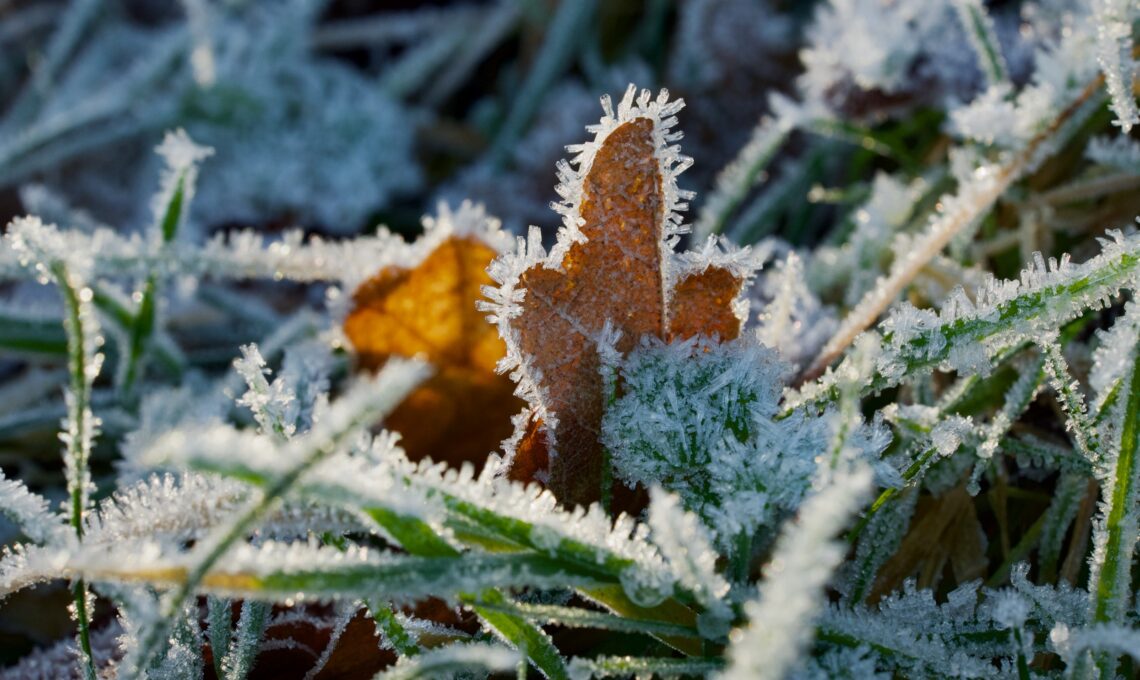
A wren was singing full throttle in the trees behind the house this morning, and I stopped to listen, even though the east wind was biting at my legs. I can’t remember a winter when I’ve waited so eagerly for the return of birdsong. Some winters we don’t seem to lose it at all – the robins keep going all through December – but this year they stopped and it felt rather strange, especially when the frost came down after Christmas and there was a silence, as if the birds themselves were waiting and listening.
On the plus side, there have been mornings when we’ve stared up at the clear sky and watched shooting stars, or gazed out at the moon setting over the islands, throwing a pale gold wake across the sea.
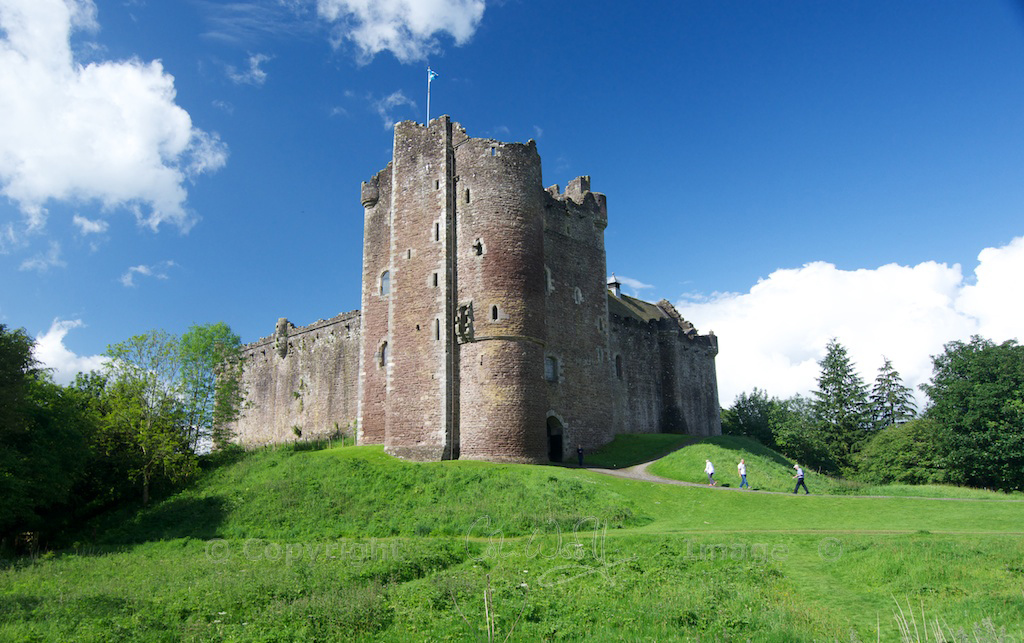
At the turn of the year, we went down to Dunadd and made the short walk up to the top. Dunadd is a hill fort in the south of Kilmartin Glen, and between the sixth and ninth centuries AD it was a stronghold of the kings of Dál Riata, whose territory included much of western Scotland and part of north-east Ireland.
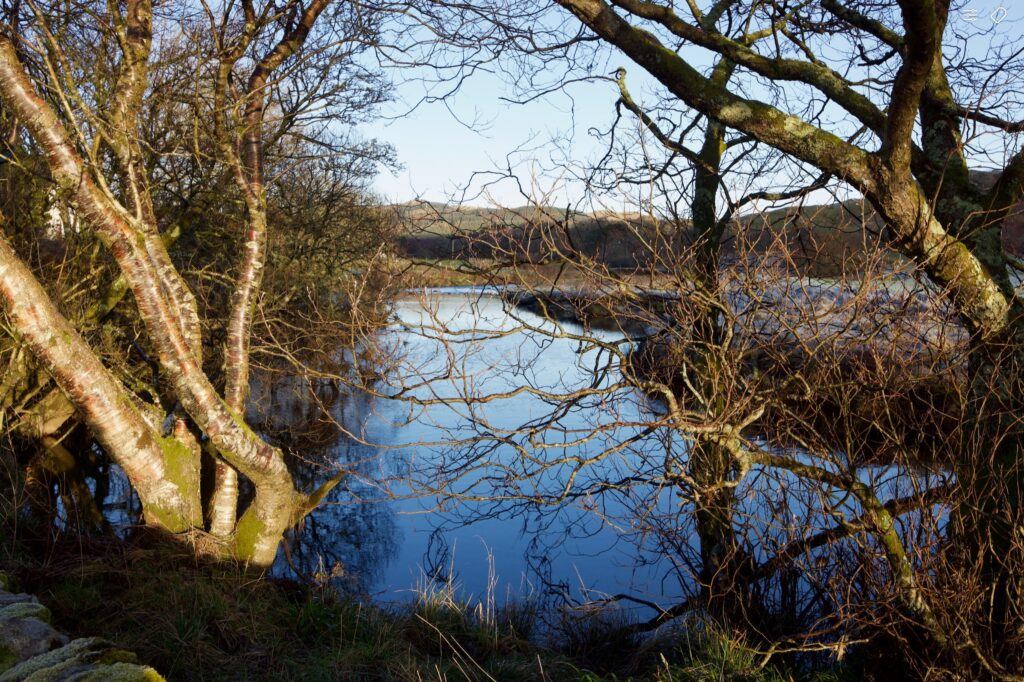
River Add at the bottom of Dunadd
I have no idea how many times we’ve been up there, but it always feels like we’re following an old processional route, one that was designed to impress. You alternately walk and scramble up the path that loops around the lower part of the hill, and towards the top there’s a narrow passage between high rock walls. When I emerge onto the open summit I’m always half-hoping that someone will still be there, sword in hand, standing in isolated splendour and looking out over their realm.
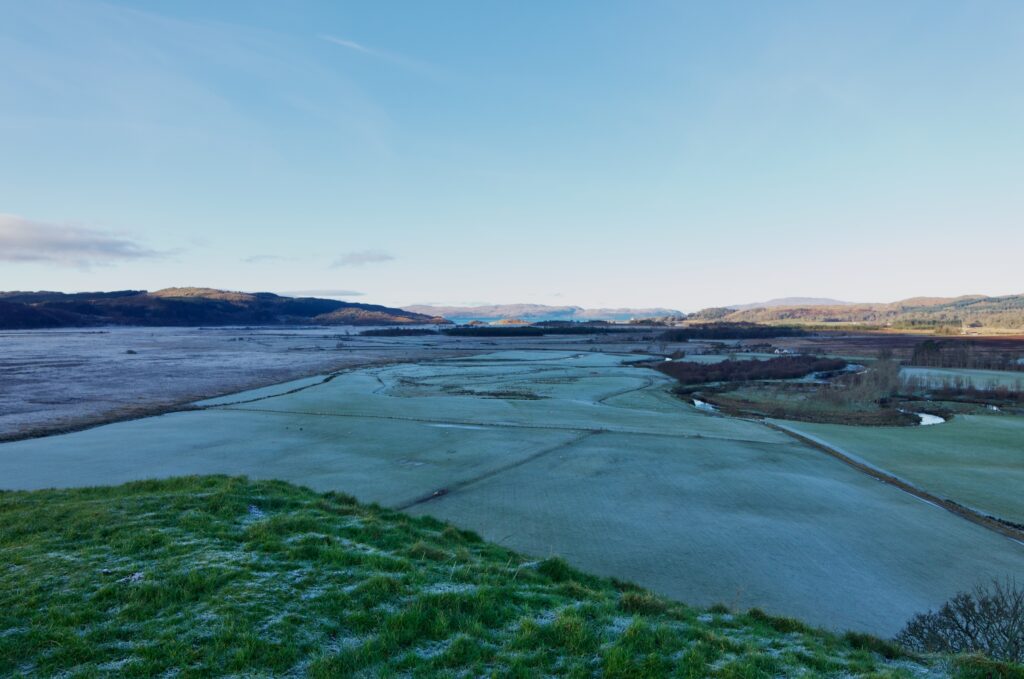
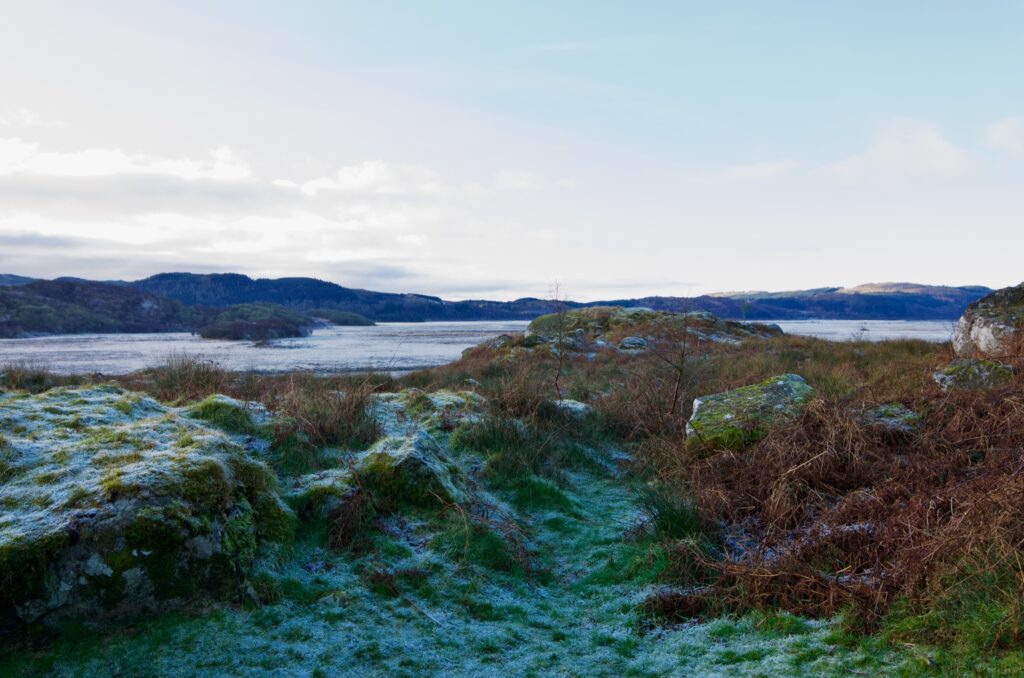
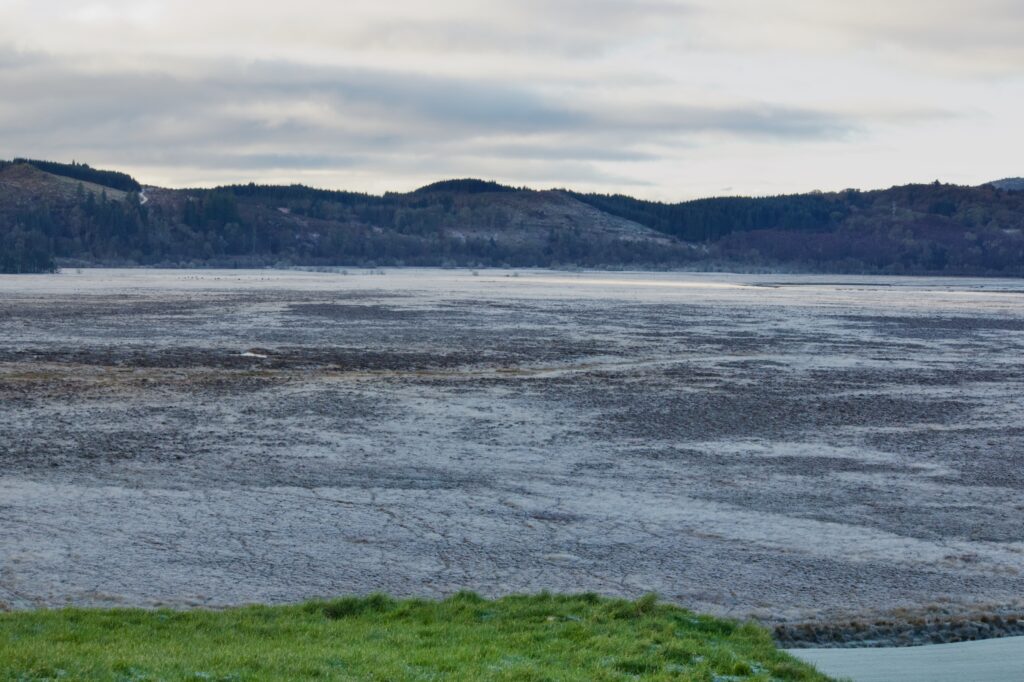
But there was no king, or even a saintly companion, in evidence, so it was just us who stood and looked out at the land stretching away below us in all directions. To the west, the River Add was making its circuitous way to Crinan and the sea, and beyond that the isle of Jura was bathed in sunshine. South, and in deep shadow, were the hills and woods of Knapdale, while low hills to the north-east concealed Loch Awe and the peaks of Cruachan beyond.
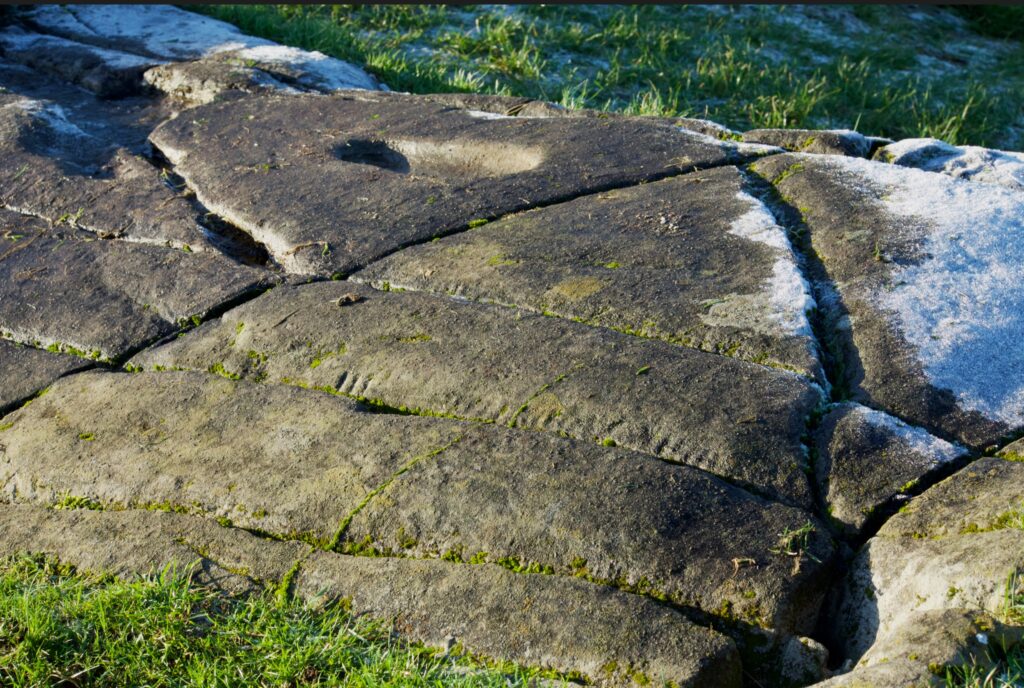
The fields were white with frost, and you could almost imagine how this hill might have looked when sea levels were higher and the tide ebbed and flowed around its base. In spring we’ve heard cuckoos from up here, and seen deer browsing in the fields. No sign of life today, though, and it was too cold to stay for long. We did, however, notice how the slanting sun was highlighting the Ogham script on the inauguration stone, a feature that’s usually quite hard to see.
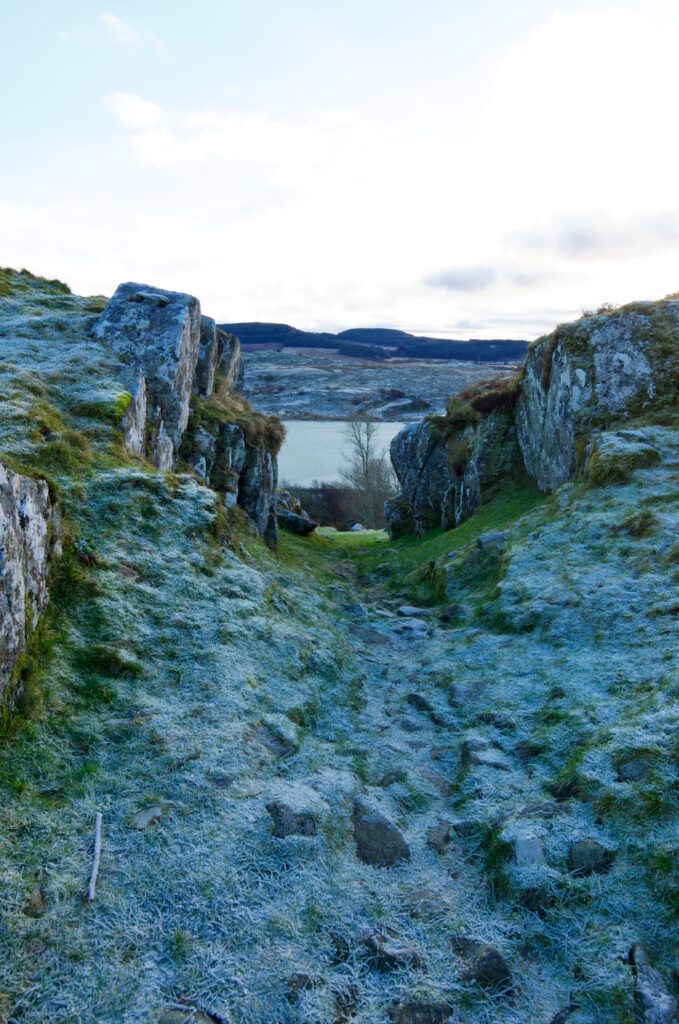
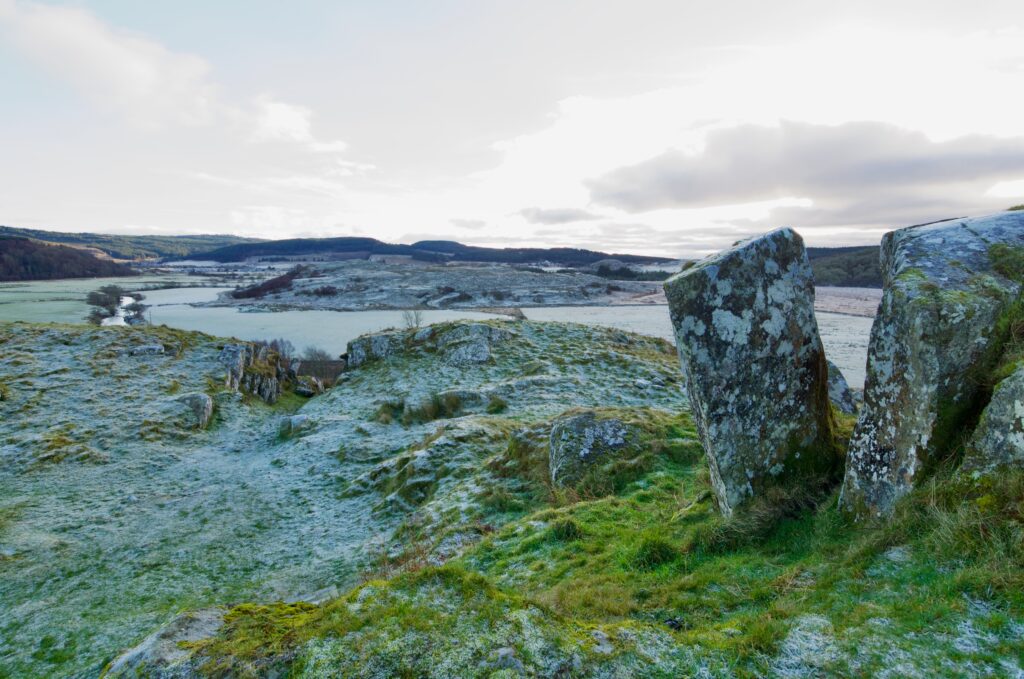
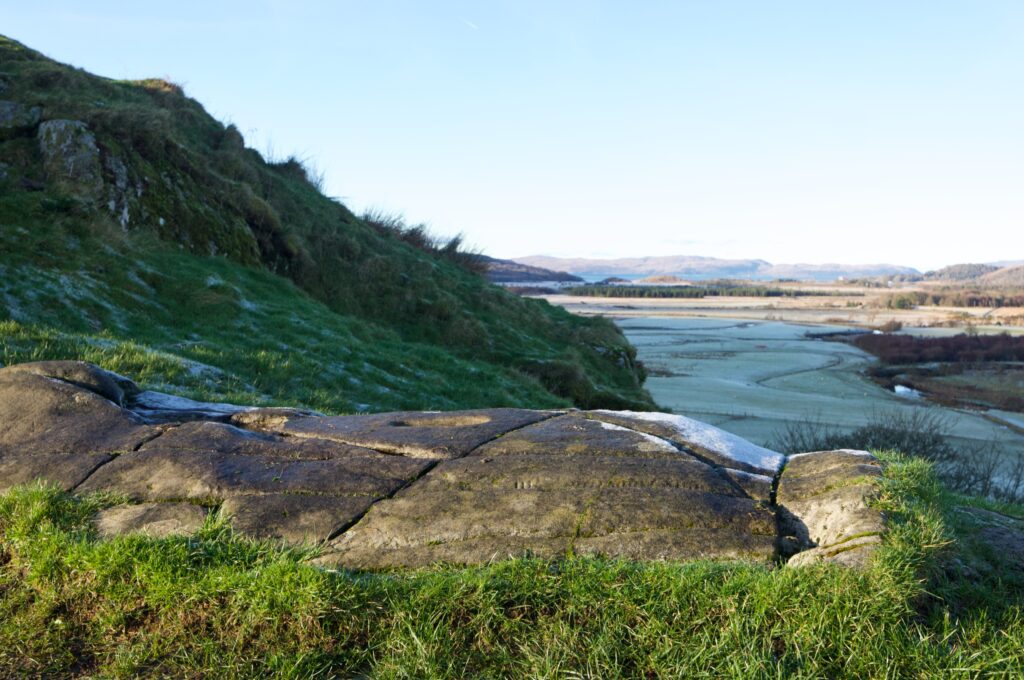
Above and below: Inauguration stone, showing the lines of Ogham script
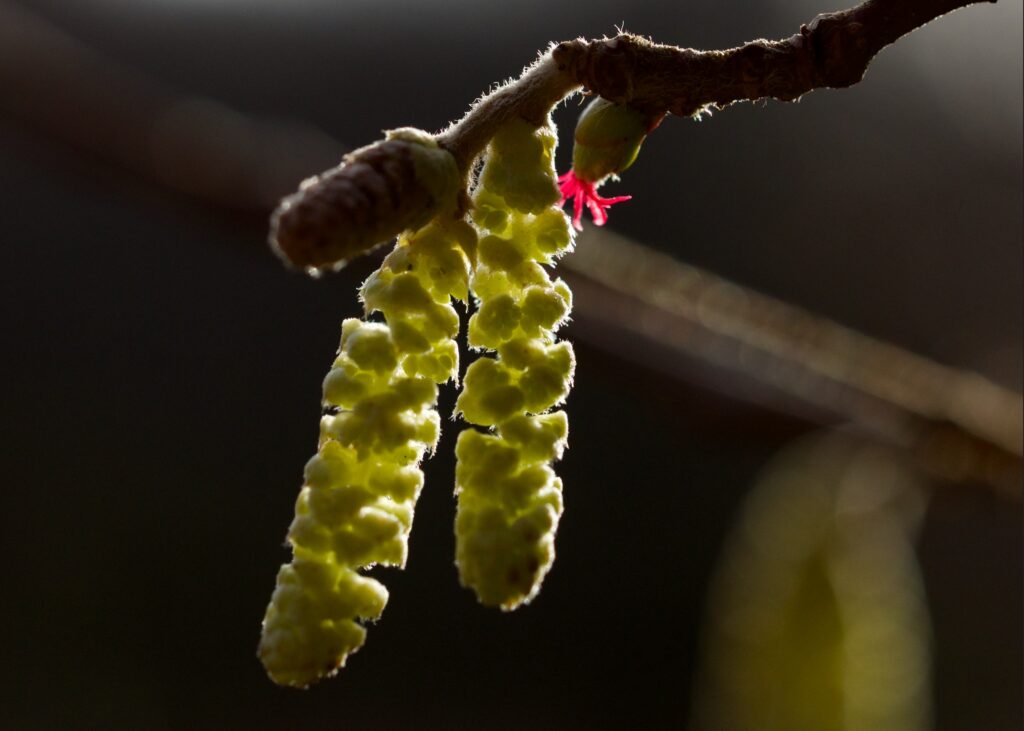
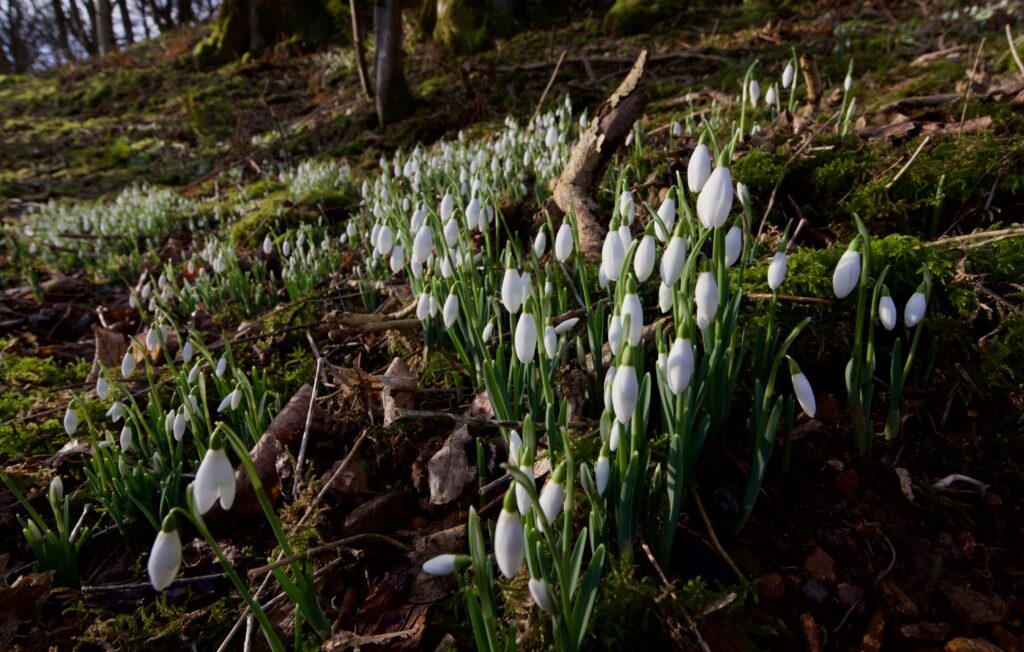
A few days later the frost was all but gone. Snowdrops were in bud, and the robins began to sing. Rain set in, and we wondered if it would ever stop. But a few days ago, in the first sunshine for ages, we drove down to Loch Barnluasgan, which is a couple of miles south of Dunadd. The woods here are ancient, consisting mostly of birch, oak, hazel and alder. Of these, only the hazels are beginning to wake up, with some catkins fully out and the bright pink female flowers in evidence. I often wonder how these delicate-looking little structures survive the drumming rain, let alone the penetrating frost. But they do.
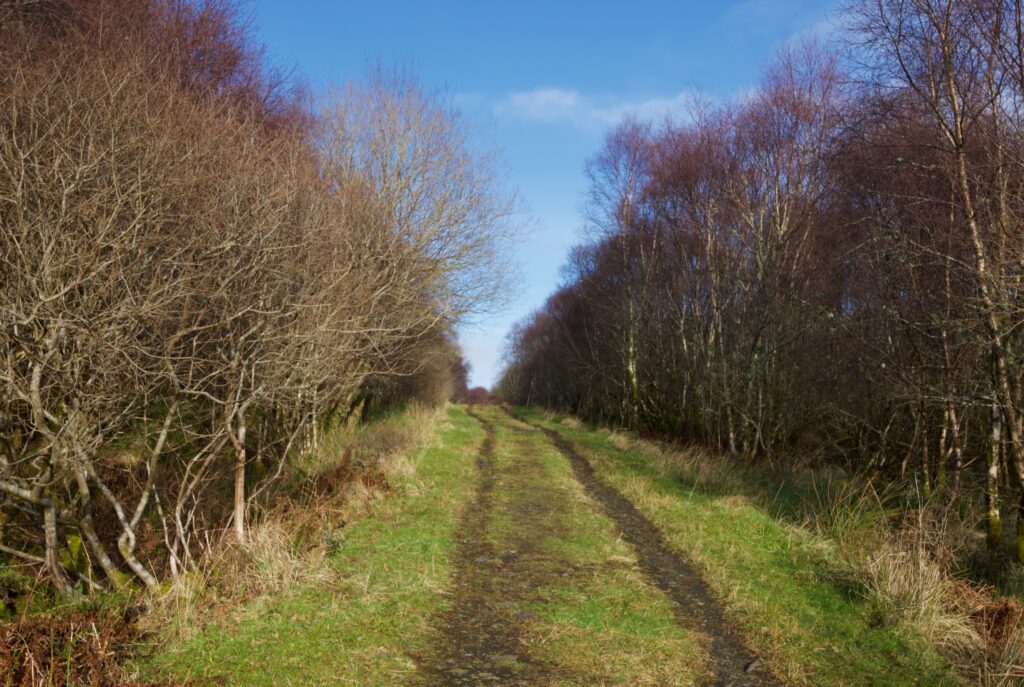
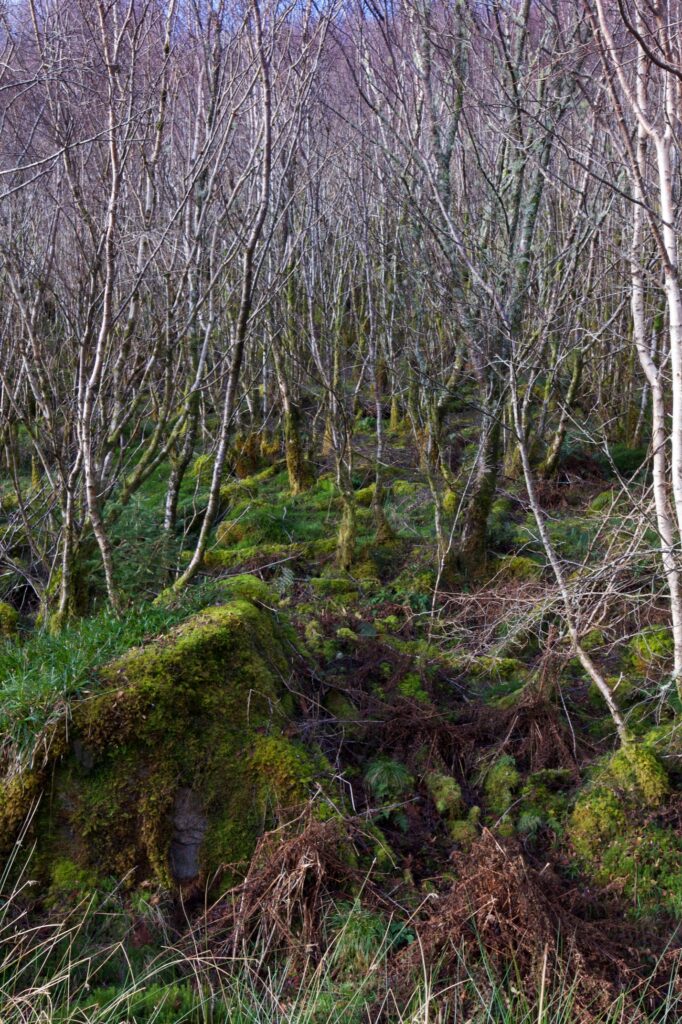
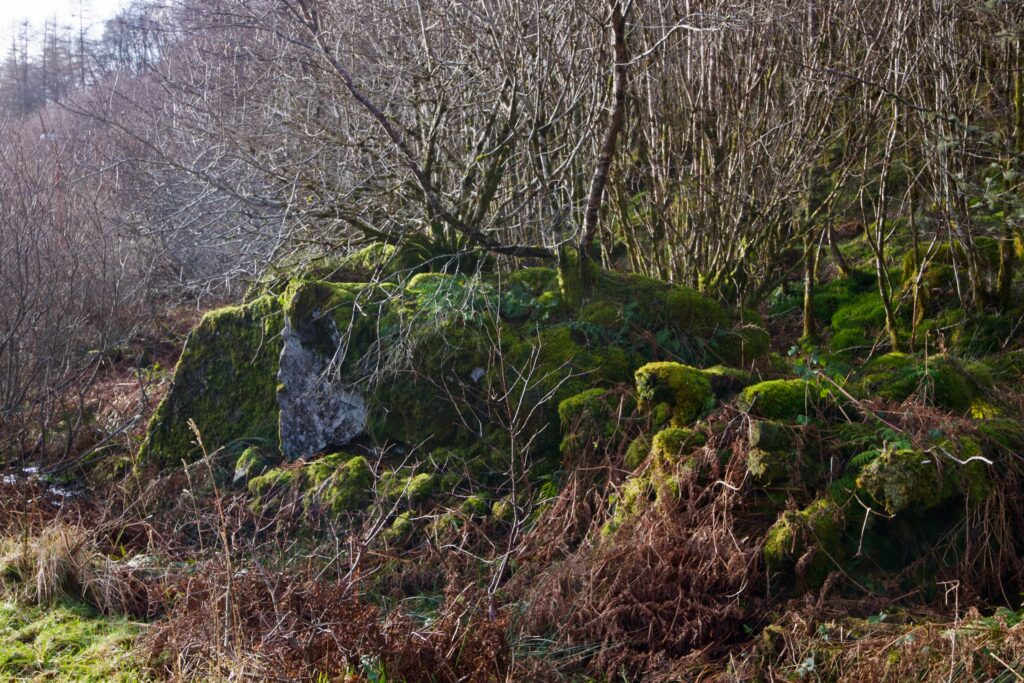
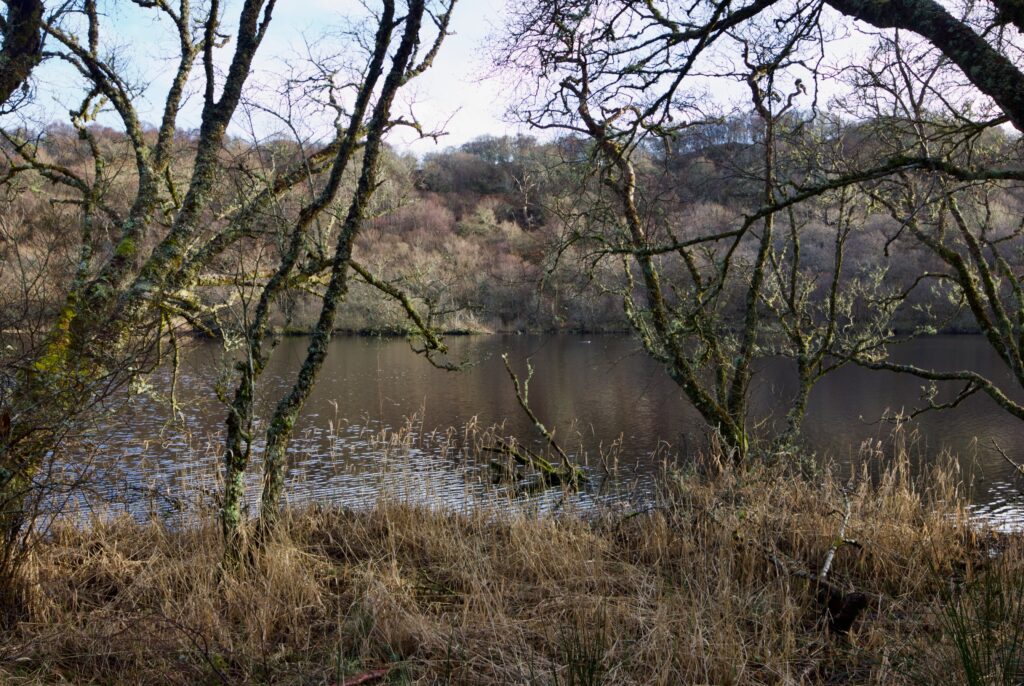
Loch Barnluasgan
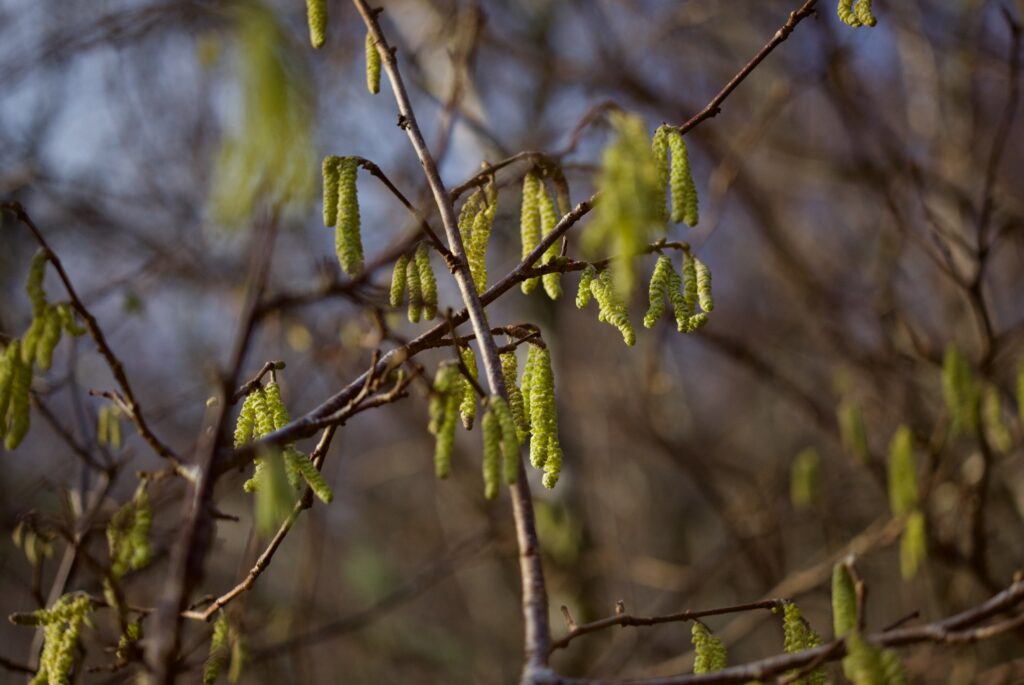
Hazel catkins (above) and with a pink female flower (below)
The path leads up to a viewpoint, and from here we looked down again at the wide estuary of the River Add. Groups of wigeon and a few curlews had gathered on the sandbanks, which were very nearly submerged by the high tide. The conversational whistles of the wigeon and the fluting calls of the curlews came up to us quite distinctly in the clear air. Through binoculars, we spotted a pair of otters diving and playing.
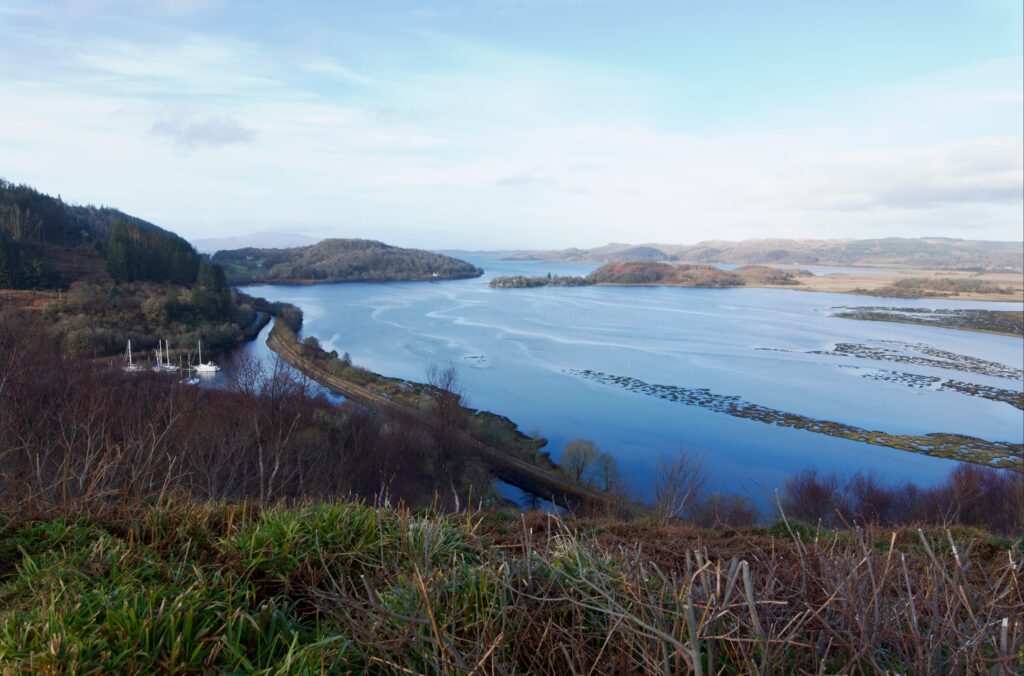
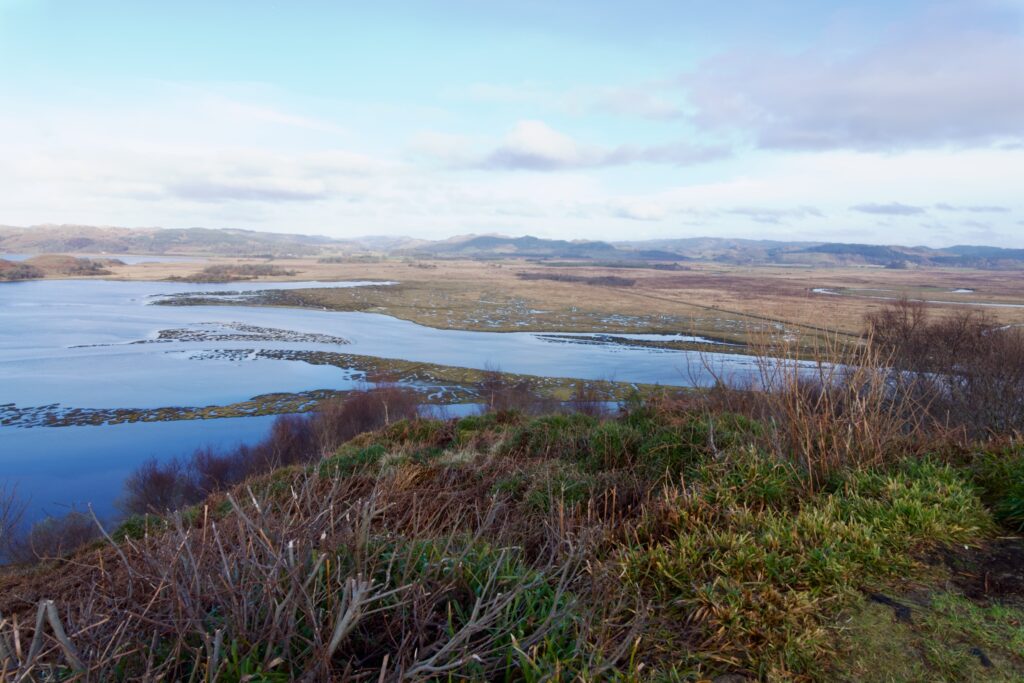
Looking north-east, with Dunadd just visible as an isolated hill beneath the skyline, far right
February has been a long time coming, but it’s nearly here. At the beginning of the month is the old festival of Imbolc, as well as the feast day of Brigid, a Celtic goddess whose origins and influences have become intertwined with those of the later Saint Bride.
‘Bride is said to preside over fire, over art, over all beauty, “fo cheabhar agus fo chuan,” beneath the sky and beneath the sea.’
Carmina Gadelica, 1900
Traditionally, Brigid is a goddess of the hearth, and of the forge; of midwifery and children, of travellers and sailors; she is also the goddess of inspiration, of poetry and music. As the patroness of healers, she has many healing springs dedicated to her throughout the British Isles. It seems very fitting that she’s associated with the return of the light.
Further reading
- Branfionn NicGrioghair, Mythical Ireland: ‘Bridget, Bright Goddess of the Gael’
- British Pilgrimage Trust: Bride’s Day
- Carmina Gadelica, trans. Alexander Carmichael (1900)
More about Dunadd on The Hazel Tree:


6 Comments
Finola Finlay
What a lovely post – the first stirrings of spring. Happy Saint Bridgets Day to you, Jo! Although I would say Saint Brigid was first and foremost a real, powerful, holy woman, whose origins and influences have become mixed up with a putitive Celtic goddess.
Jo Woolf
Thank you, Finola, and happy Saint Bridget’s day to you as well! I hope you’re settling into your new home – it’s lovely to see your blog posts about it. Thank you also for your feedback about Saint Brigid. It seems like a real tangle. If you’re planning a post about her I look forward to reading it.
Finola
Post now up, Jo: https://roaringwaterjournal.com/2026/02/01/st-brigid-and-her-wells/
Jo Woolf
Thank you!
Bob Hay.
Hi Jo, better late than never. Pretty cold looking there and surprised to see frost and snow so close to the sea. I couldn’t recall reading before about the Ogham incisions on Dunadd, but have just reread my Ewan Campbell’s ‘Saints and Sea- kings’ where he does mention them. Excellent book from Historic Scotland on Dunadd’s history and all that’s been found in archaeological digs.
Jo Woolf
Still cold, Bob, but at least the mornings are getting lighter. That sounds like a good book – thanks for mentioning it – I’ll try and find a copy.