
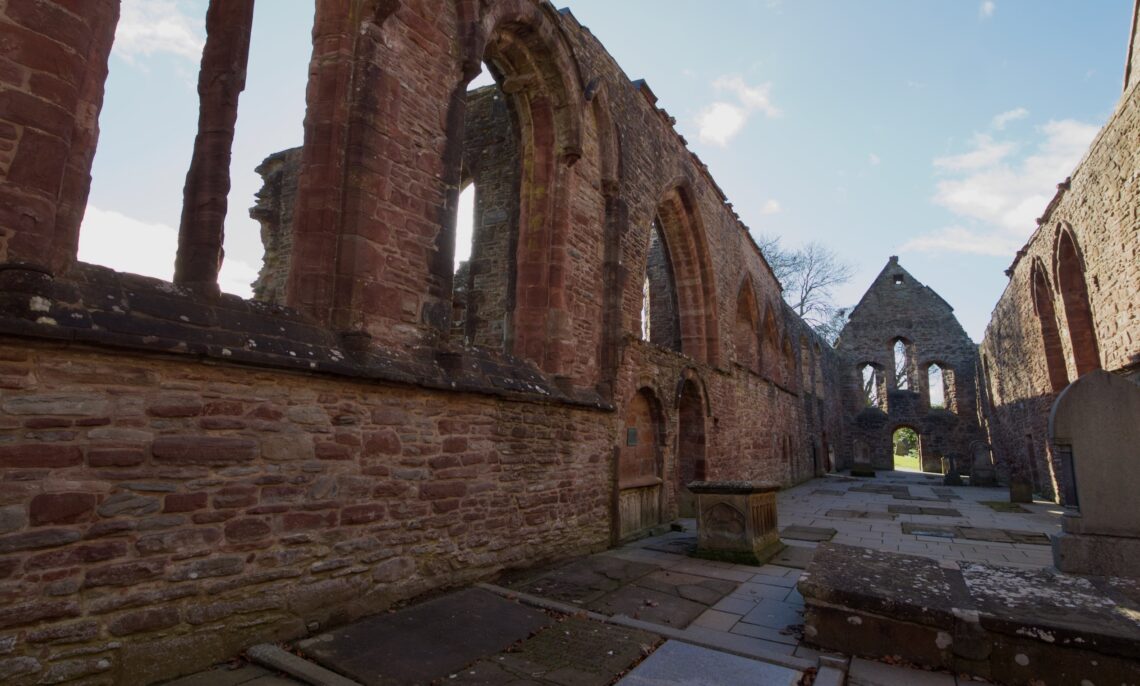
Beauly Priory
The village of Beauly lies about 12 miles to the west of Inverness, and it’s delightful in its own right, with interesting shops fronting a tree-lined square with a 15th century mercat cross. It does, however, also contain an old place that I’ve wanted to visit for a long time.
Towards the northern edge of the village, where the river makes a lazy loop in its journey towards the Beauly Firth, is a graveyard enclosed by a red sandstone wall. Beauly Priory sits well back within the graveyard, shaded by trees and not immediately noticeable from the street. However, once you’re walking down the path it’s hard to take your eyes off the west front that faces you, with its ornately arched doorway and trio of slim windows, now lacking their tracery and framing only the sky.
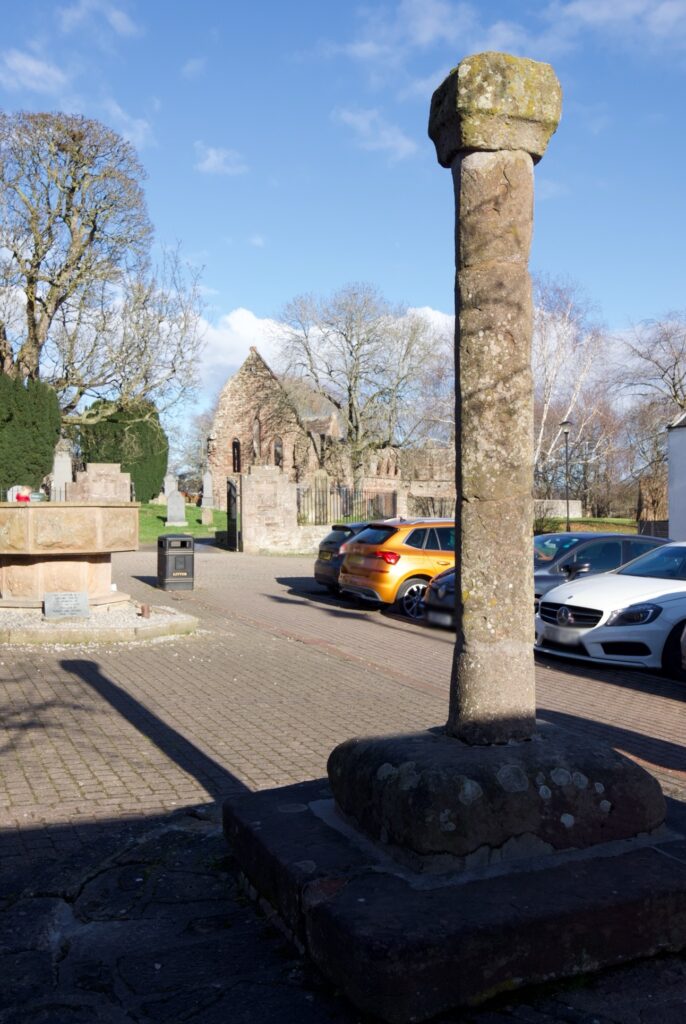
Mercat cross
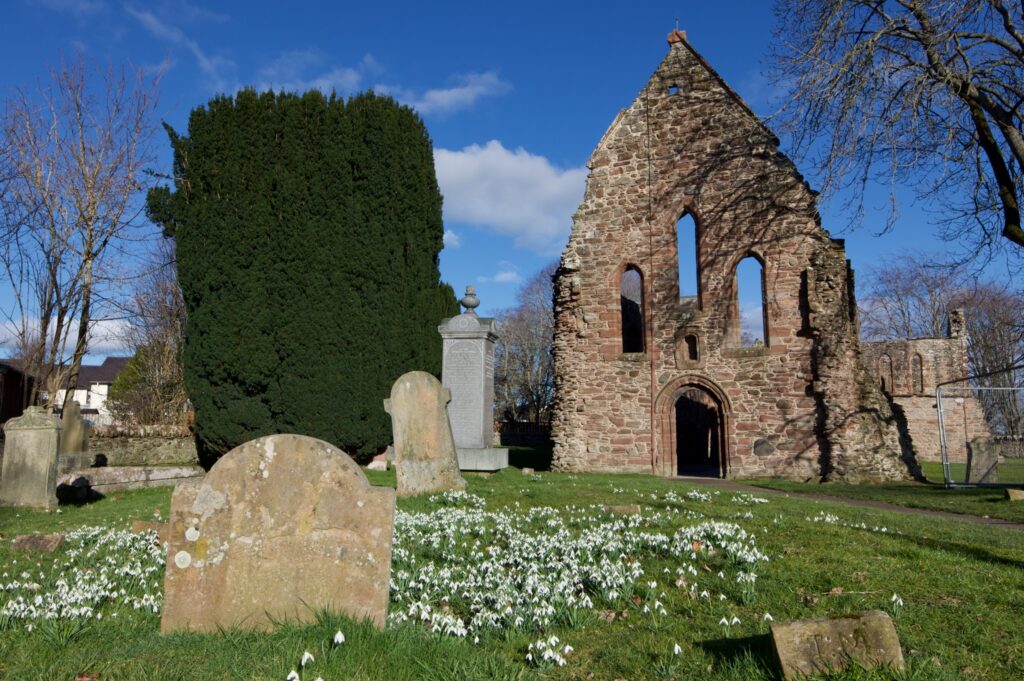
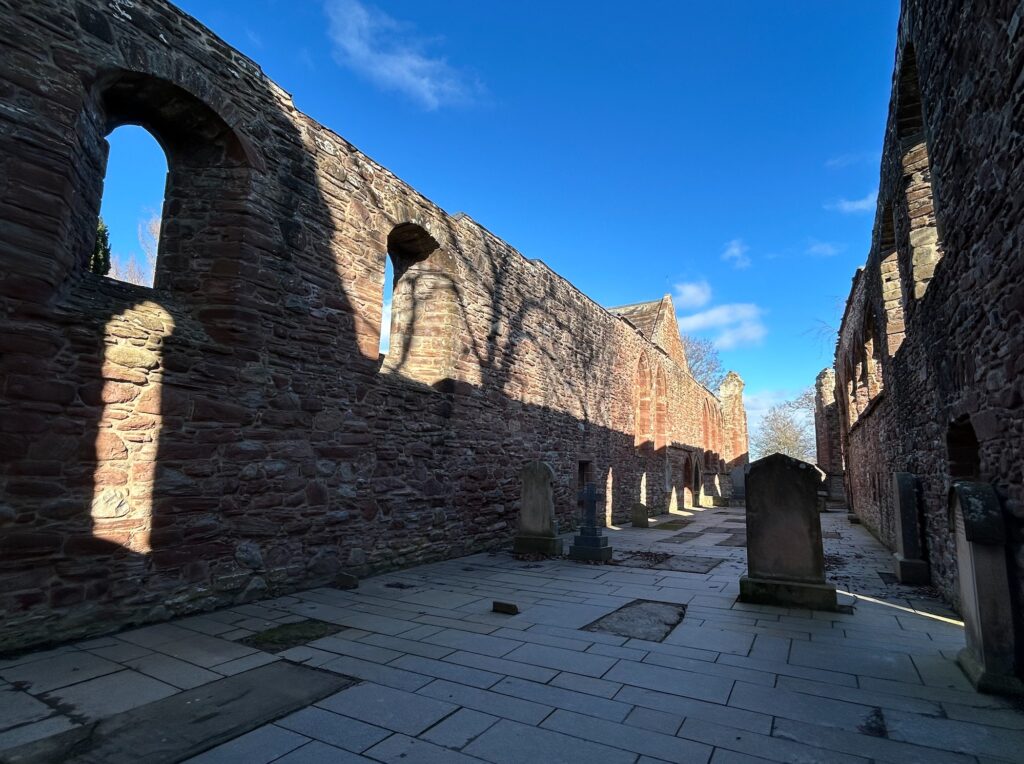
The Priory was founded around 1230 by Sir John Bisset or Byset, a local landowner of Anglo-Norman descent. The monks whom Bissett invited to establish the priory were of the Valliscaulian order, taking their name from Vallis Caulium or Val-des-Choux, the location of their original monastery in Burgundy. Only two other Valliscaulian houses were established in Scotland: at Ardchattan Priory on Loch Etive, and at Pluscarden, near Elgin.
It is likely that either the monks or Sir John Bisset himself bestowed the name Beau lieu, meaning ‘beautiful place’, which became anglicised to Beauly. Another story tells how Mary, Queen of Scots endorsed this description during her visit in 1564. (The Gaelic name of the settlement, A’Mhanachainn, simply means ‘place of the monks’.)
The Valliscaulians embraced an austere way of life, abstaining from meat, wearing hair shirts and sleeping fully clothed on beds without a mattress. Despite their vows of personal poverty, the priory amassed wealth through farming and fishing; it also received tithes from local parishes and donations from generous local patrons.
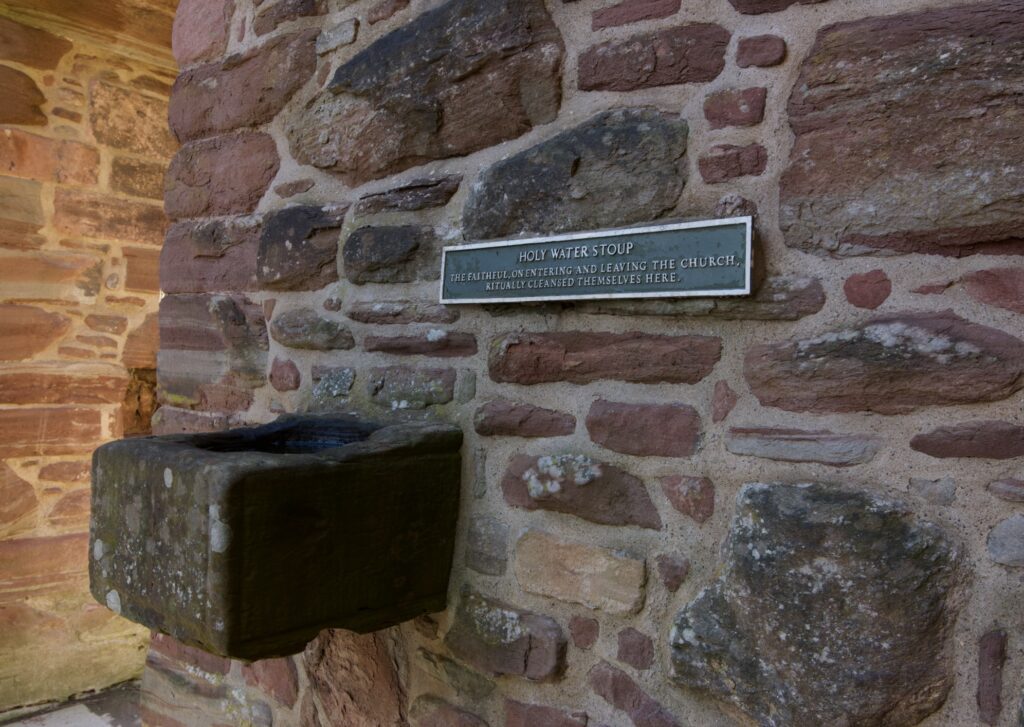 A stoup for holy water, set into the wall
Fish from the River Beauly provided a valuable source of food, and its reputation for tastiness seems to have spread far and wide. A story tells how William Thomson, a priest from Beauly Priory, made a 40-day journey on foot and by sea to the Valliscaulians’ mother house in France, only to be given a dressing-down by the prior for having neglected to bring some of his favourite Scottish salmon. What an awkward situation! Thomson couldn’t exactly nip home and get some, nor could he order it online. (Luckily there’s now a local farm shop that provides this service.)
Sir John Bisset may not have witnessed the completion of the priory. His uncle, Walter Bisset, Lord of Aboyne, was implicated in the murder of the Earl of Atholl, who had been his victorious opponent in a tournament at Haddington in 1242. Sir John was likely involved in the murder too, because he fled with his uncle to Ireland and then England. Bisset’s estates passed to the Frasers of Lovat, whose seat was Beaufort Castle, a few miles upstream from the priory. The Frasers became custodians of the priory, and in 1430 Sir Hugh Fraser undertook a programme of repair and restoration.
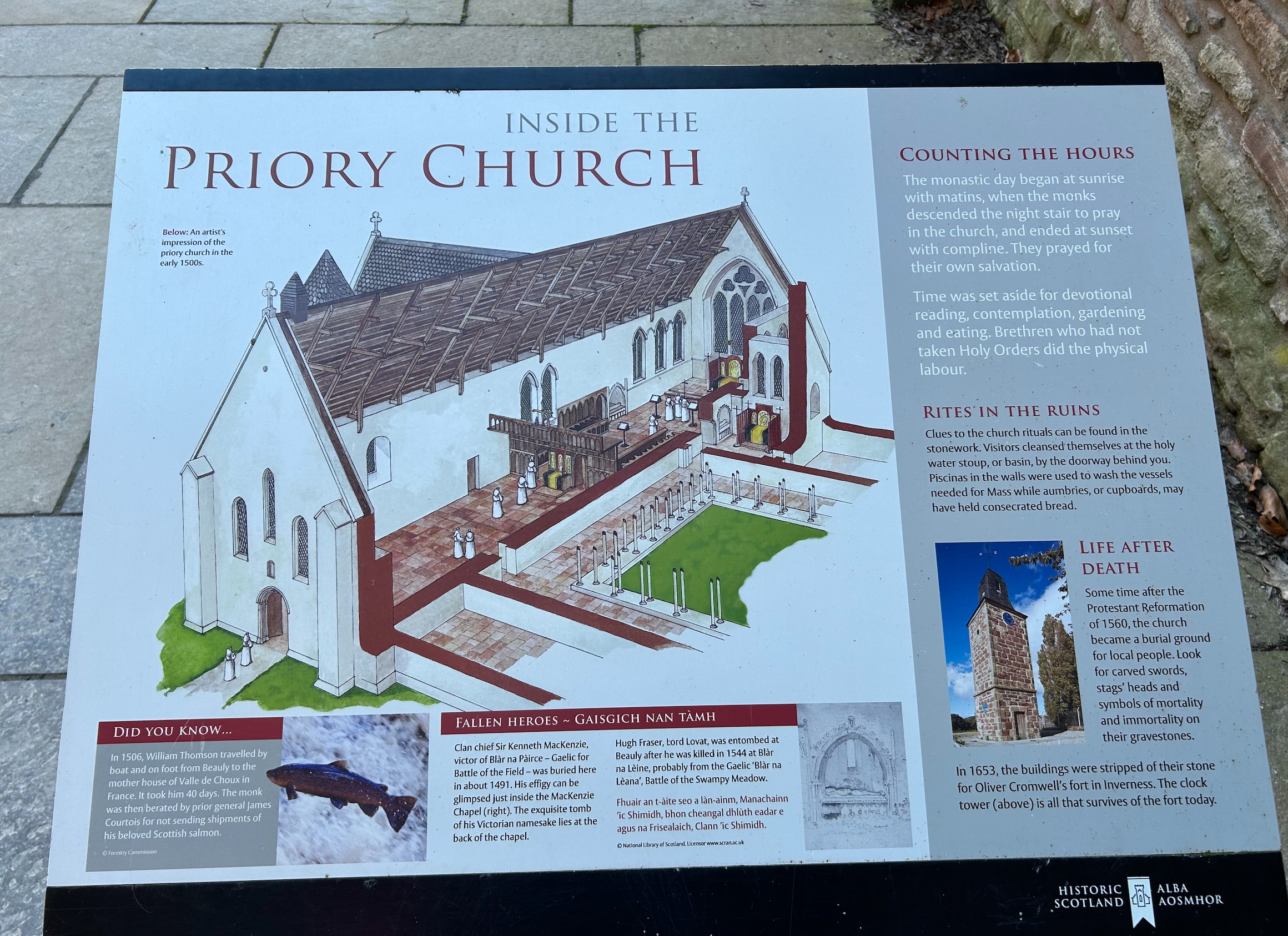
Information sign with an artist’s impression of the layout of the church (click to enlarge)
In the early 1500s, after the Valliscaulians were absorbed into the Cistercian order, Beauly became a Cistercian priory. The prior, Robert Reid, added a prior’s lodging which featured a painted chamber called a ‘shamerbrea’, from seòmar brèagha, meaning ‘beautiful room’. This wasn’t in existence for long, however. In 1560 the Scottish Reformation abruptly ended the Pope’s authority and replaced it with the Protestant Church; monastic communities were forcibly dispersed and their churches laid waste. A hundred years later, during the Civil War, the ruinous state of the priory buildings was an opportunity for Oliver Cromwell who plundered the stone to build a citadel at Inverness: an impressive fortification which was pulled down after the restoration of the monarchy.
Very little has survived of Beauly’s cloister or the domestic buildings, so it is only the Church that preserves the memory of the monks’ daily life: the services they held and the prayers they offered at pre-ordained times, day and night. Prayers would also have been said for the souls of local landowners and benefactors, many of whom are buried here.
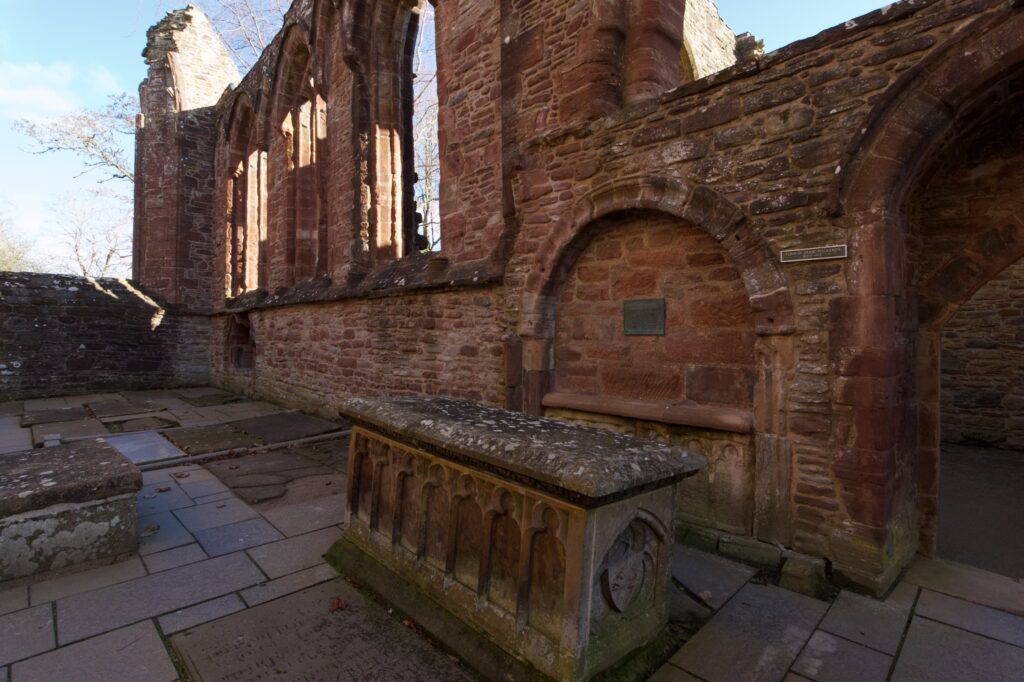
Above: At the entrance to the south transept is the tomb of Prior Alexander Mackenzie, who died in 1479.
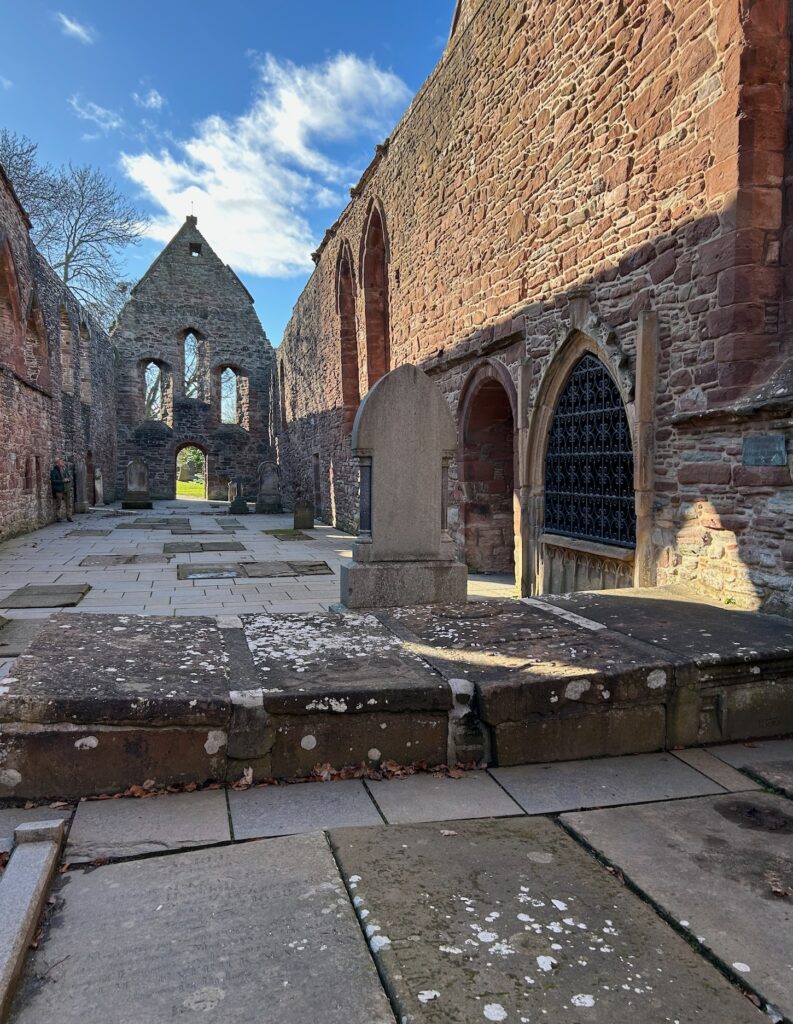
In the north transept is a private chapel in which several Mackenzie chiefs are buried. It is locked but you can see the entrance to it above (with a metal grille over an arched window) and the exterior (below, sunlit). The Mackenzies held lands to the north of the Priory.
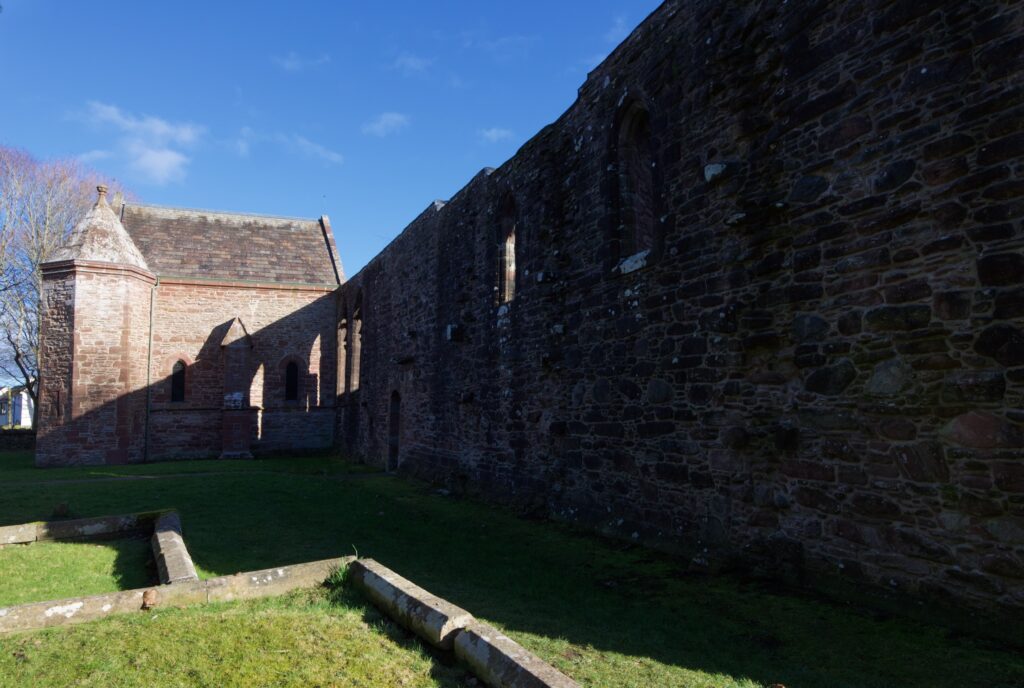
Among the Fraser of Lovat lairds laid to rest here is Hugh Fraser, 3rd Lord Lovat, along with his son, Simon Fraser, Master of Lovat. Hugh Fraser was killed at a clan battle called Blàr na Lèine in July 1544; his son was badly wounded and died a few days later.
The clash happened at a time when raiding and counter-raiding were a way of life and feuds could be upheld from one generation to the next. On this occasion, a group of Frasers and Mackintoshes under Lord Lovat and Ranald Gallda (the latter aspiring to be Chief of Clan Ranald) had been on a raiding expedition into MacDonald territory, and were returning home when they were ambushed and defeated by a group of MacDonalds and Camerons. It took place on a flat plain at the north end of Loch Lochy in the Great Glen, and by all accounts it was a ferocious battle, with only a handful of survivors on either side.
 Sources seem to be divided about what Blàr na Lèine actually means. Some maintain that it comes from Blàr na Lèana, meaning ‘The Battle of the Swampy Meadow’, but others are quite adamant that it means ‘The Battle of the Shirts’. According to tradition, the day was so hot that the assailants stripped off their heavy chainmail and fought in their shirts or tunics. I have no doubt about which version I prefer, partly because a ‘Battle of the Shirts’ sounds like a Monty Python sketch, with the Knights of the Holy Grail galloping around on their imaginary horses. If the Highlanders really did discard their chainmail, you’d think there must be a lot of it still lying somewhere in the ground between Loch Lochy and Loch Oich.
Until very recently, a huge wych elm stood at the entrance to the graveyard. It was believed to be over 800 years old, in which case it witnessed all the events in the life of the Priory. According to the Ancient Tree Forum, it was the last survivor of an ancient avenue of elms that led from the Priory to the village square. Having succumbed to Dutch elm disease, it fell down in January 2023. (I’d love to have seen this monster – it looks like it was having fun trying to scare people in this photo on the Ancient Tree Forum’s website). In April 2024 two replacements were planted: one sapling had germinated in the graveyard and could be a descendant of the original tree, and the other had been propagated by the Royal Botanic Garden in Edinburgh.
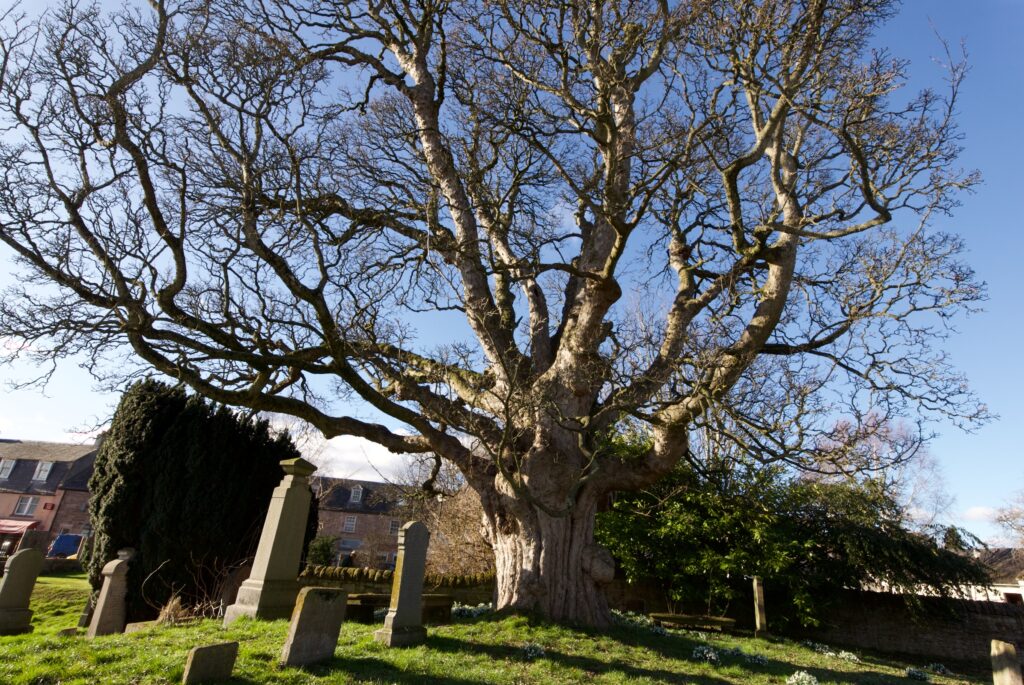
By comparison, the sycamore (above) growing on the other side of the graveyard is a mere youngster at only 200 years old. But it has developed a considerable girth, as sycamores often do, with a trunk measuring 5.5 metres (18 feet) in circumference. A number of big yew trees, likely Irish yews which are often found in churchyards, flank the north side of the Priory.
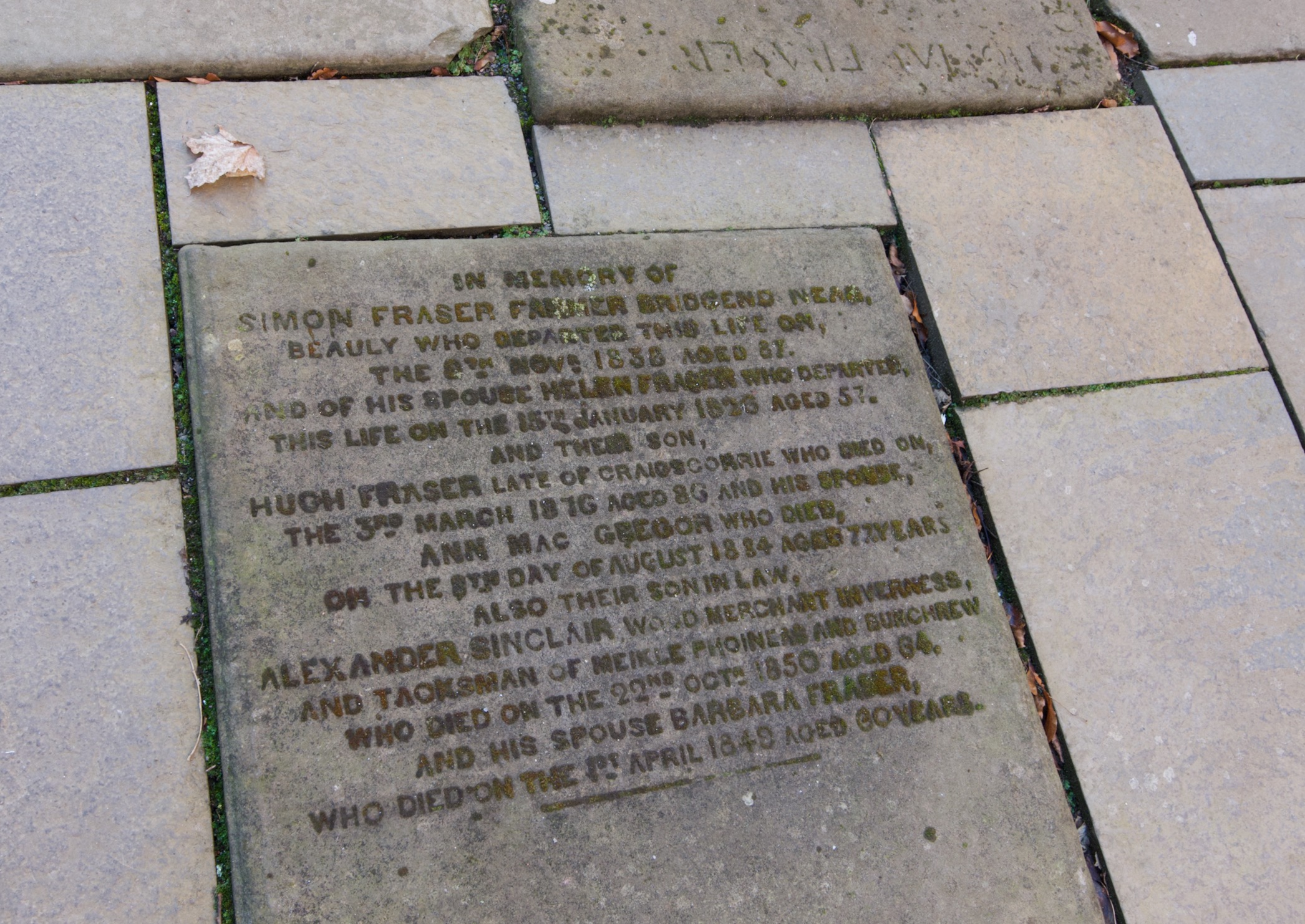
19th century Fraser family tombstone (click to enlarge)
Since the church fell into ruin, the floor of the nave has been used for burials. This is quite common in abandoned churches, but I never feel completely easy walking around on them. It’s as if some of the congregation are still there. I was, however, struck by one particular grave slab, of Simon Fraser of Bridgend and his family (above); moss has filled the inscription so neatly and perfectly that I had to look at it twice.
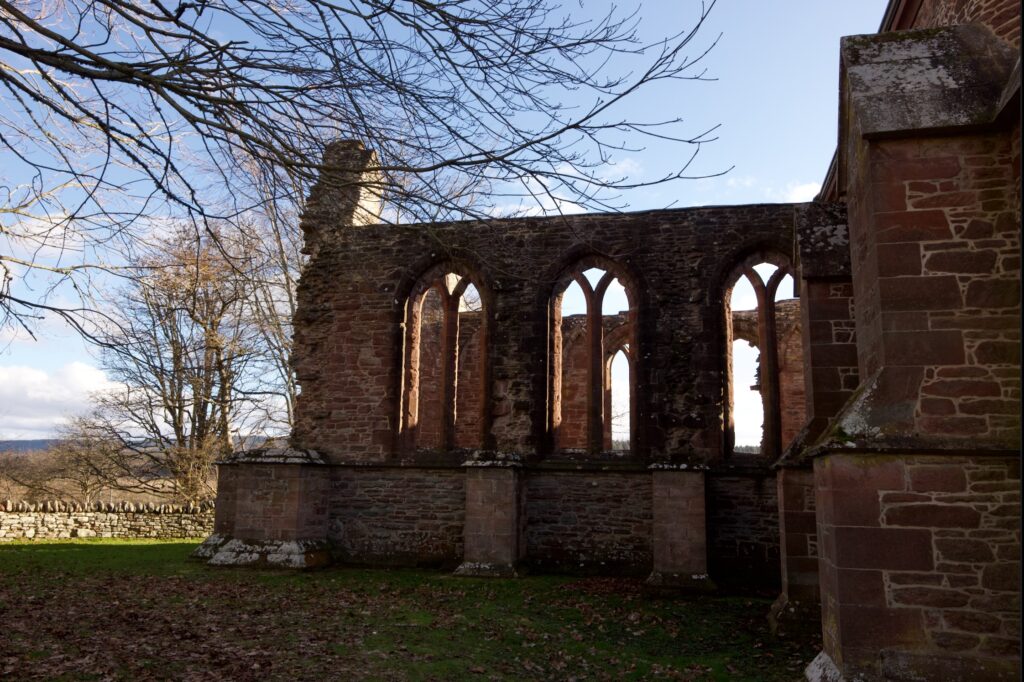
East end or presbytery
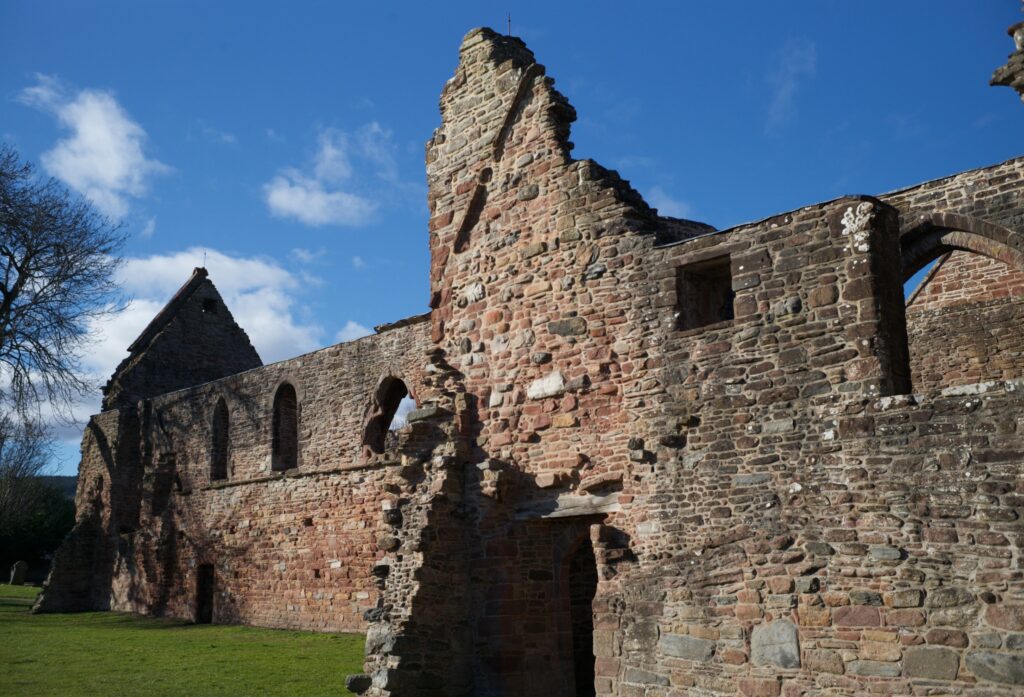
South wall and transept
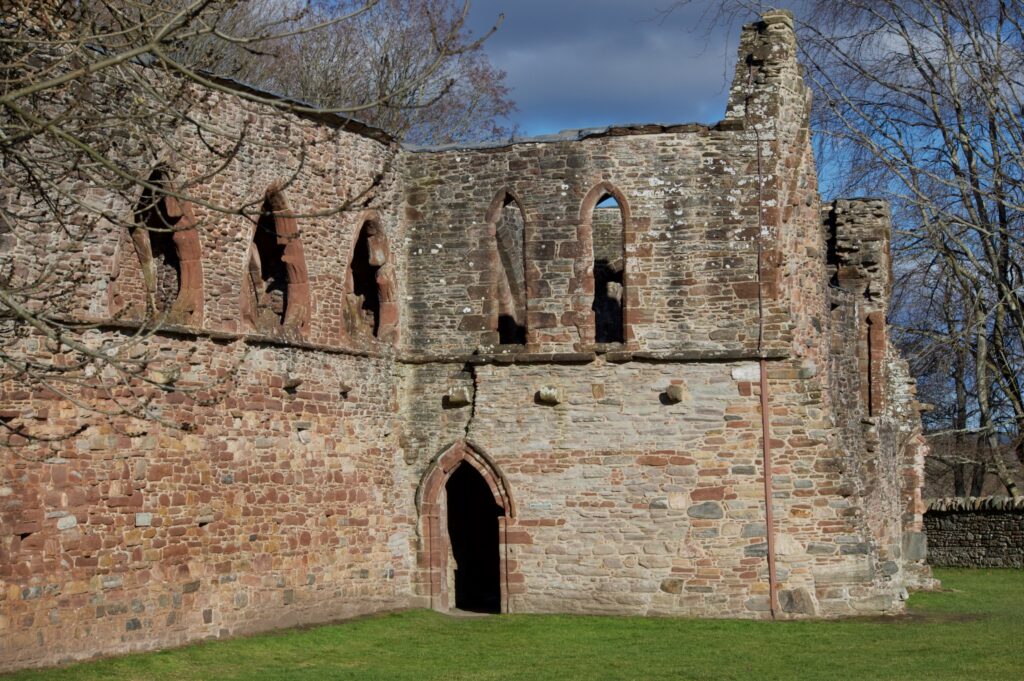
South transept
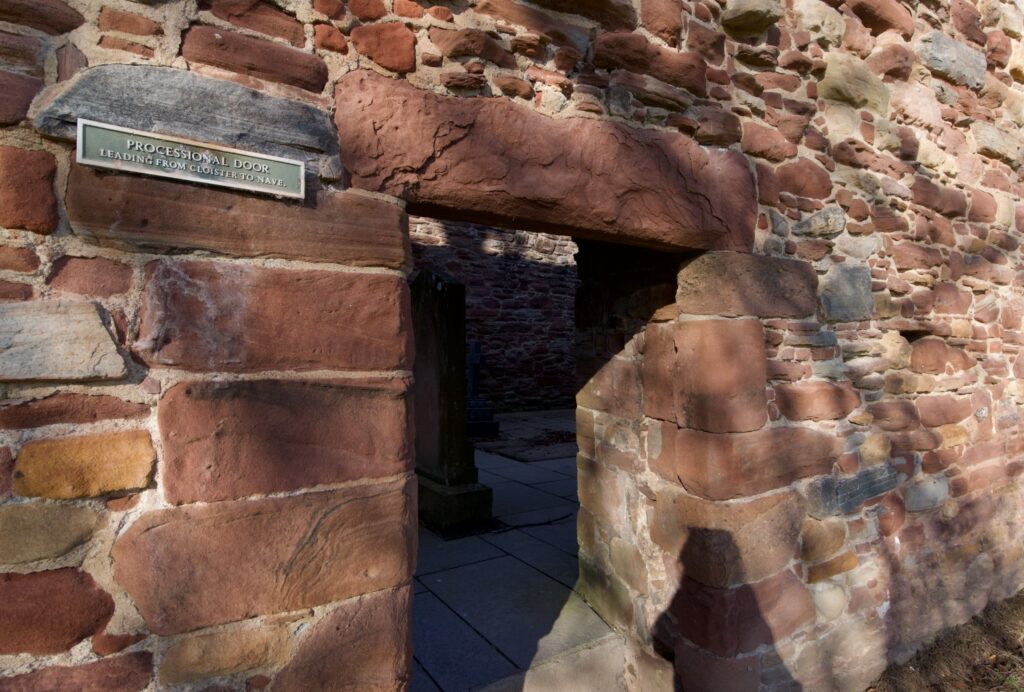
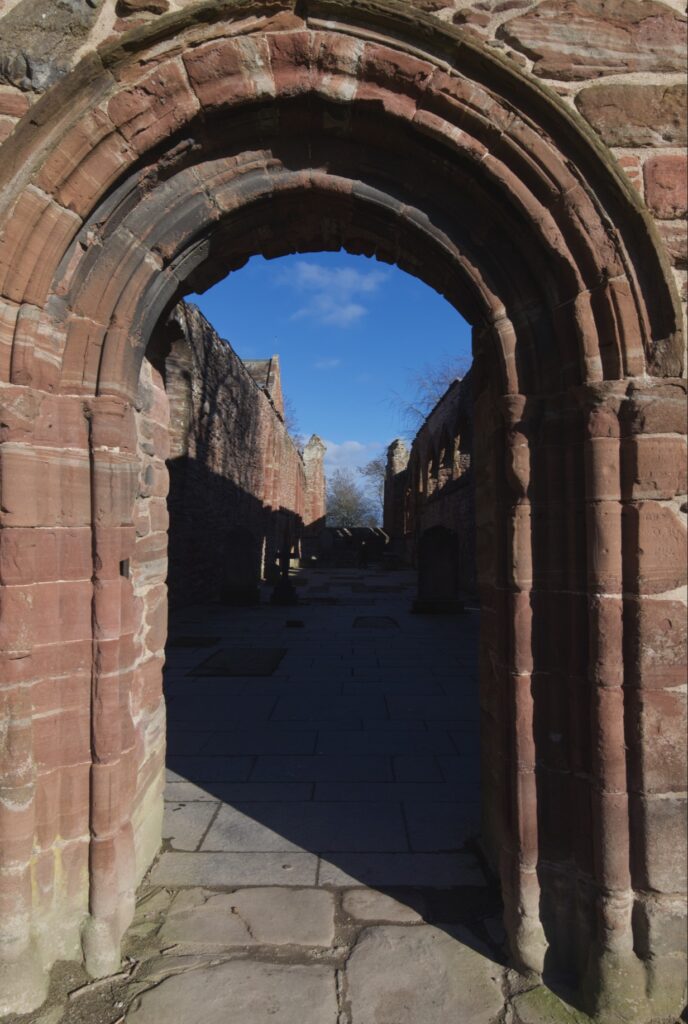
Processional door from cloister to nave
Around the outside of the building, bright sunlight was throwing deep shadows under the trees and flushing the sandstone walls with a warmth that certainly wasn’t in the air. The place felt austere yet serene, in a way that ruined churches often do. But not lonely, because it seems as if local people walk around here often, and likely hold it in great affection – in much the same way, incidentally, as they do at Craig Phadraig, not far away.
Further reading
- Historic Environment Scotland
- Historic Environment Scotland – site designation
- Am Baile
- Historic Environment Scotland: The Battle of the Shirts
- Clan Cameron – The Battle of Blar nan Leine
- Graveyards of Scotland: The Battle of the Shirts?
- Ancient Tree Forum – Beauly wych elm
- Royal Botanic Gardens, Edinburgh
- Clan Fraser
- Visit Beauly
Photos copyright Colin & Jo Woolf


2 Comments
ROBERT HAY
Interesting comment Jo about that monk not bringing any fish to his superior. No frozen transport in those days of course, but read somewhere in a description of a fish pond made by the medieval monks on a sacred isle in Loch Awe, that they’d introduced carp into it which they’d carried in bags of wet moss for many miles. Knowing how tough those fish are it didn’t surprise me
Jo Woolf
Perhaps if the fish was smoked, Bob, it would have kept OK, especially if it was in winter. You’d still have to be pretty dedicated to burden yourself with a load of fish if you’re walking most of the way. Incredible about the carp on that island! But yes, you do read about carp ponds at monastic sites – I’d never thought about how they got them there.