
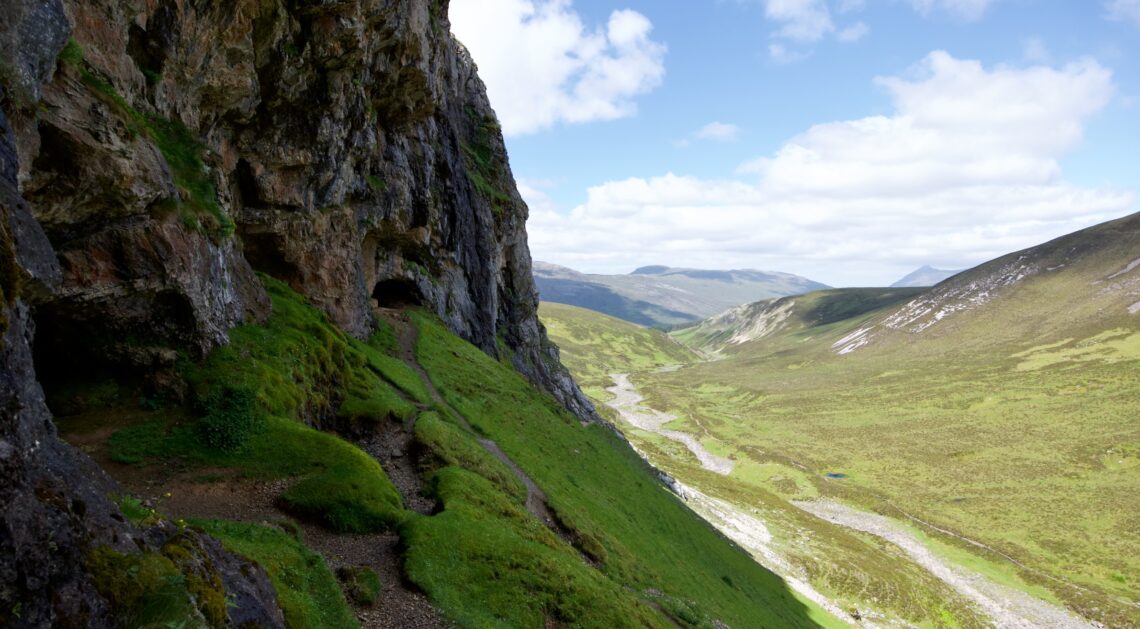
The Bone Caves of Inchnadamph
We’ve just spent a few days in Assynt, so that Colin could go hunting for wild flowers and we could also visit some places that have long been on our wish-list.
One of these was the Bone Caves of Inchnadamph. I’d heard of them many years ago, but they had always seemed remote and hard to access. To get there, you really need to be staying somewhere local, and we solved that by finding accommodation about 15 miles away. But north-west Scotland is vast and beautiful, and it still took ages to get there on the winding single-track roads, partly because we kept stopping to admire the views.
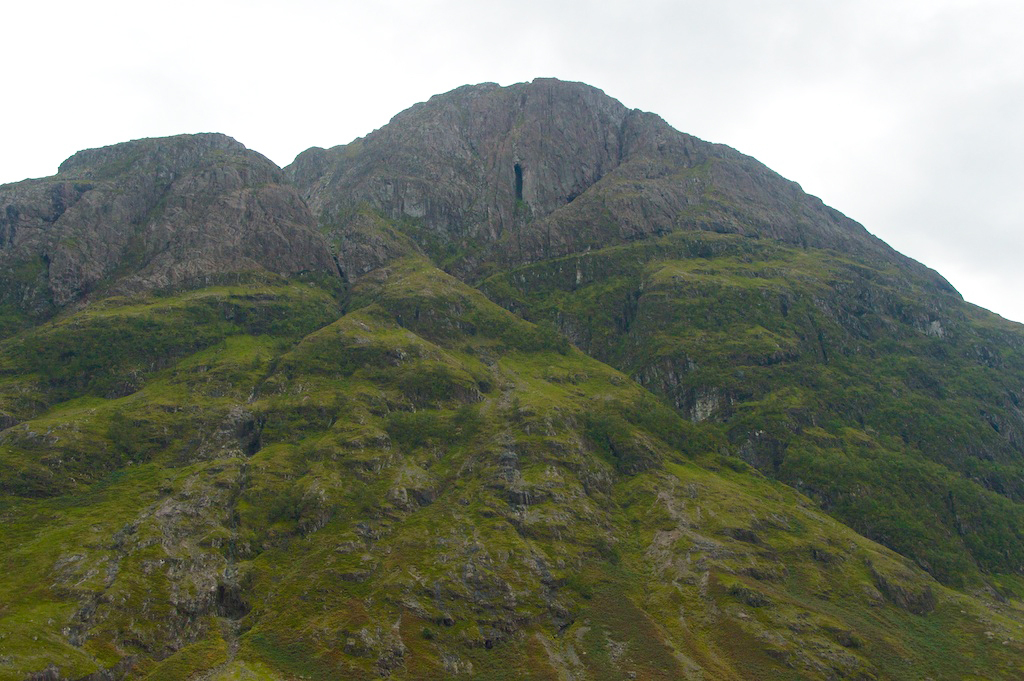
Inchnadamph comes from the Gaelic, Innis nan Damh, meaning ‘meadow of the stags’. It’s not a village but rather a few scattered houses on the main A894 road just south of Loch Assynt. The country around is wild: a sea of moorland and lochans rolls away in every direction, and out of it loom the extraordinary peaks of Canisp, Suilven and Cul Mor.
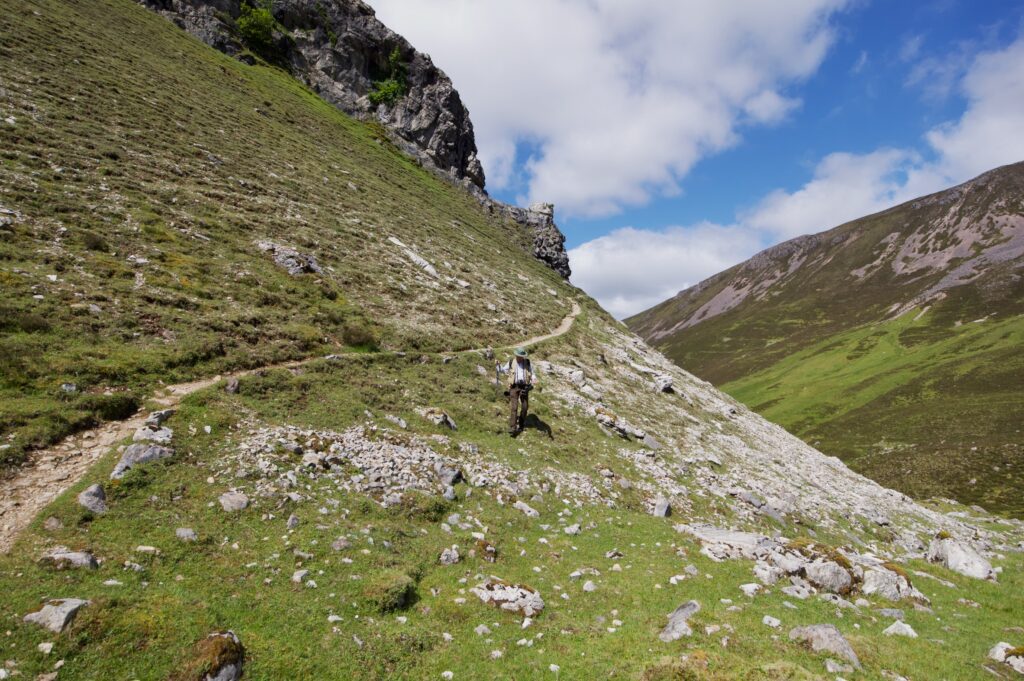
From the car park at Inchnadamph, a footpath climbs up into the glen alongside a fast-flowing burn. It was a cool morning with quite a brisk wind, and the waterfalls were roaring after heavy rain. We stopped on the path to watch a dipper catching insects mid-stream, and paused again when we heard a cuckoo above the noise of the water.
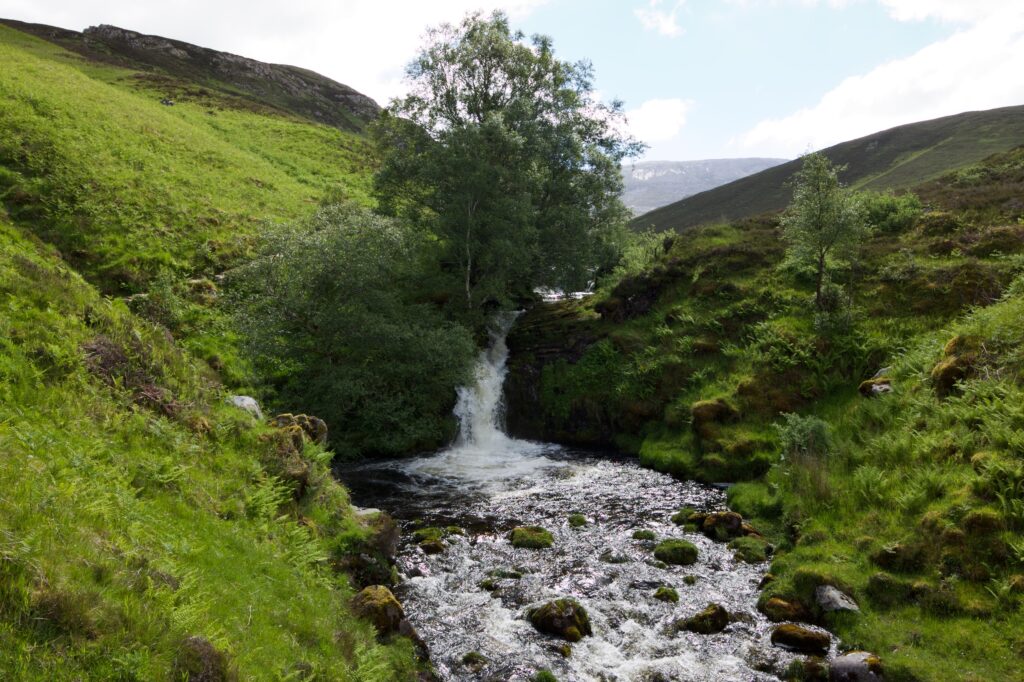
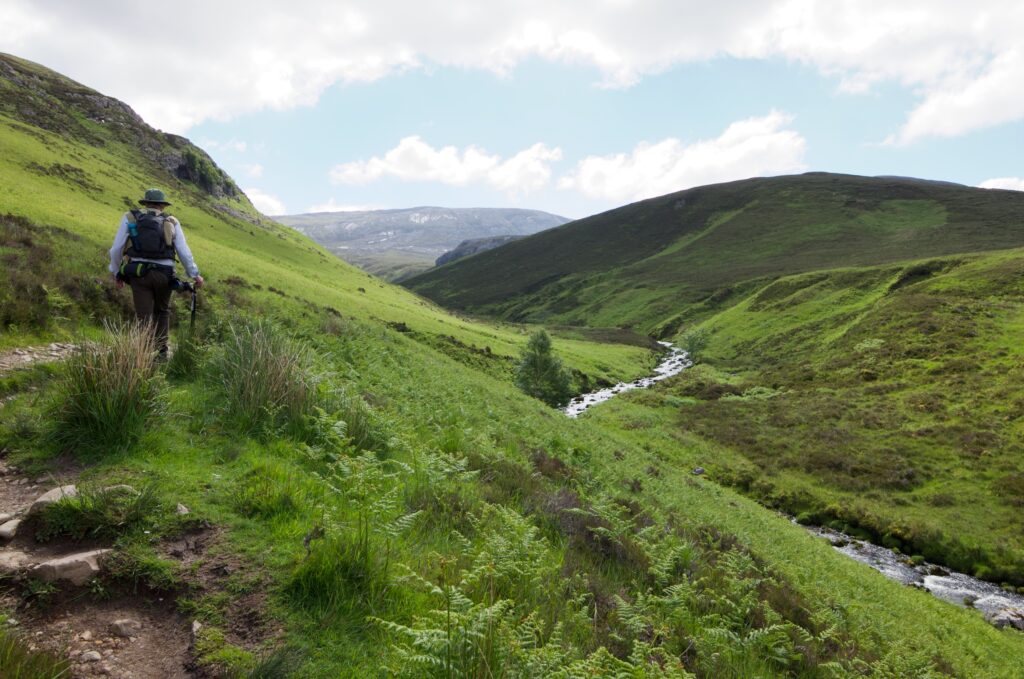
It’s not a steep climb, but as we gained height the views began to open up. We were also fascinated to see that the river has a trick of disappearing underground and reappearing again, thanks to the porous nature of the underlying limestone. Water was bubbling up out of the ground and forming clear pools that spilled down the hillside across a lush carpet of grasses and wild flowers that are flourishing in the nutrient-rich soil.
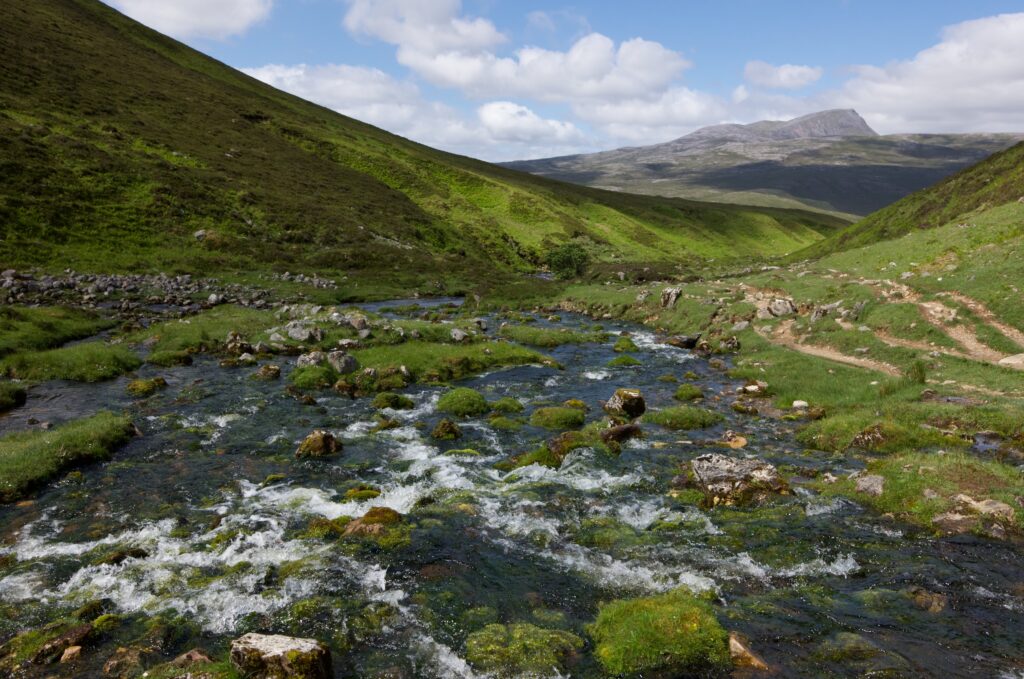
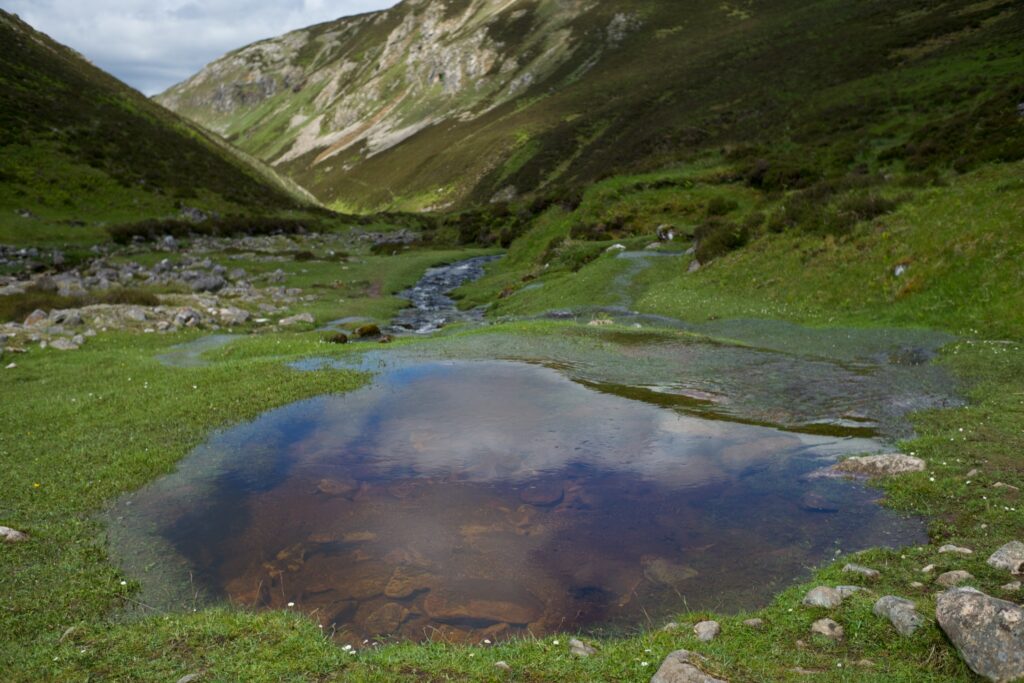
Apparently, this brimming pool is known as ‘the elephant trap’. Luckily no elephants were struggling in it, or we’d have had to rescue them.
In fact, it’s the limestone that has allowed the caves in this glen to form. Over a period of some 250,000 years, water draining through the rock has sculpted a system of underground chambers with linking passages through which the river can flow. During that immense time glaciers have come and gone, scouring and deepening the glen while slicing through this network of channels. That helps to explain why the entrances to the Bone Caves of Inchnadamph are not actually on the valley floor but high up on its southern flank.
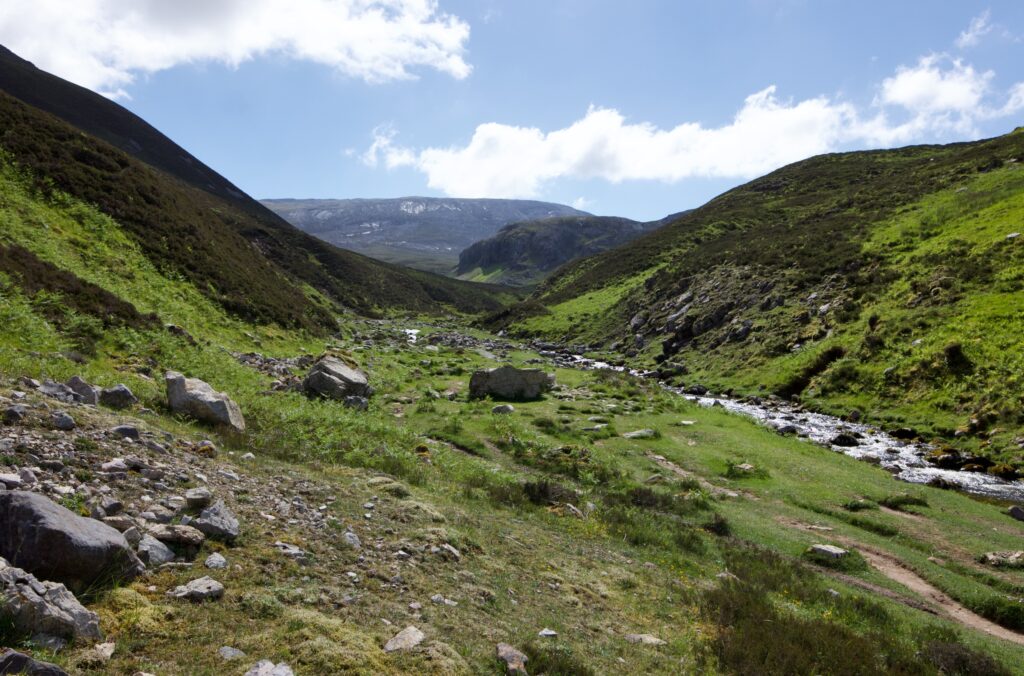
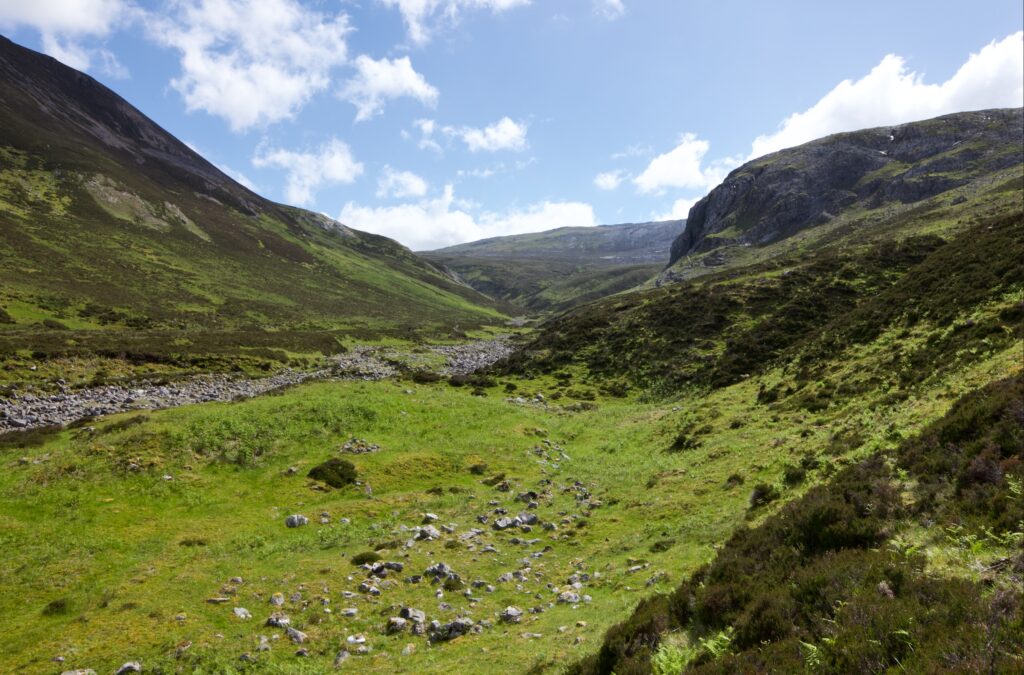
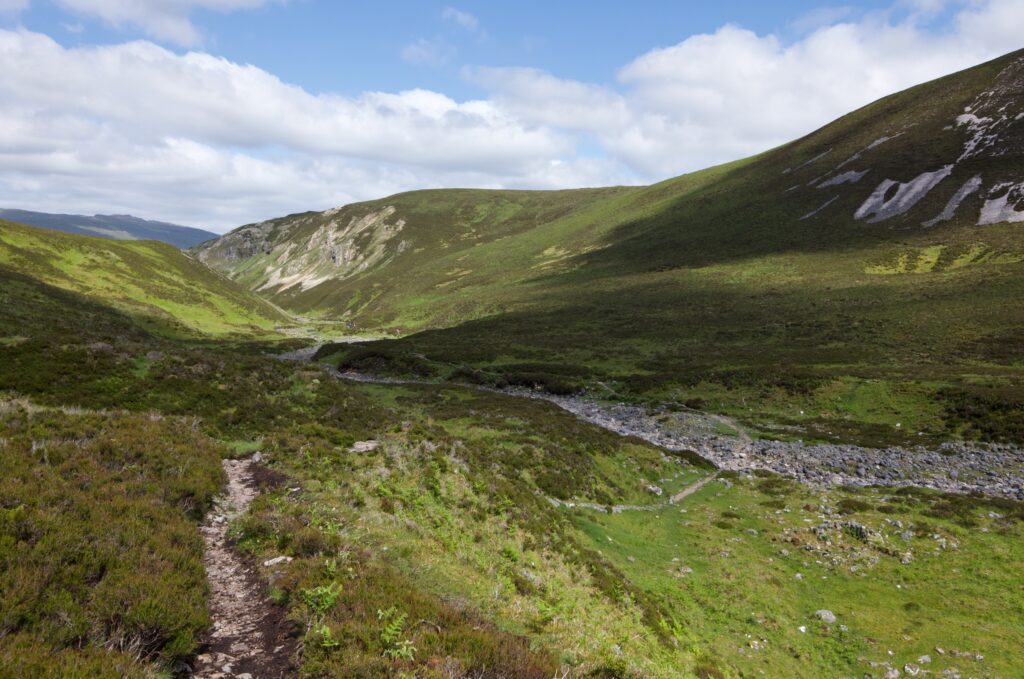
The track crosses the river, which at that point was flowing underground, so we were stepping on dry boulders. At Inchnadamph, a network of caves known as the Uamh na Claonite cave system extends for several kilometres beneath the ground and contains a number of sumps that can only be traversed by diving.
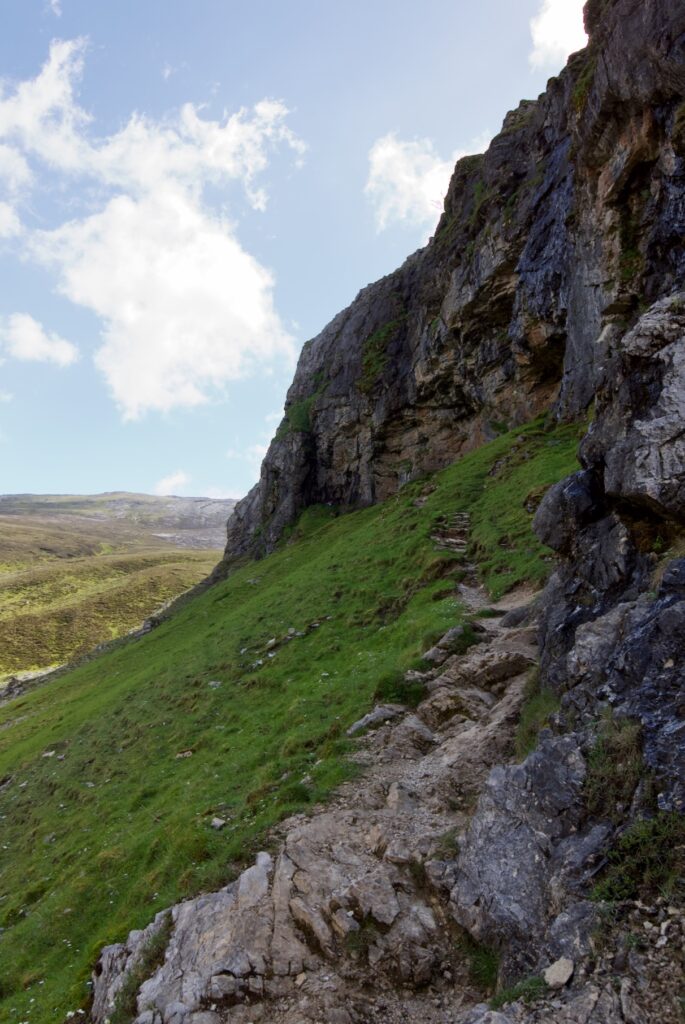
The last stretch up to Creag nan Uamh, ‘the crag of the caves’
And why are they called the Bone Caves? Over the last century or more, an astonishing collection of animal bones – and some human ones – have been unearthed from these caves. They include mammals that once roamed here between the ice ages – Arctic fox, wild horse, wolf and lynx. In addition, around 1,000 fragments of reindeer antler have been found, ranging between 47,000, 25,000, 23,000 and 8,300 years old. These were from female and young male reindeer, which suggests to scientists that the slopes of Breabag at the head of the glen were their calving grounds.
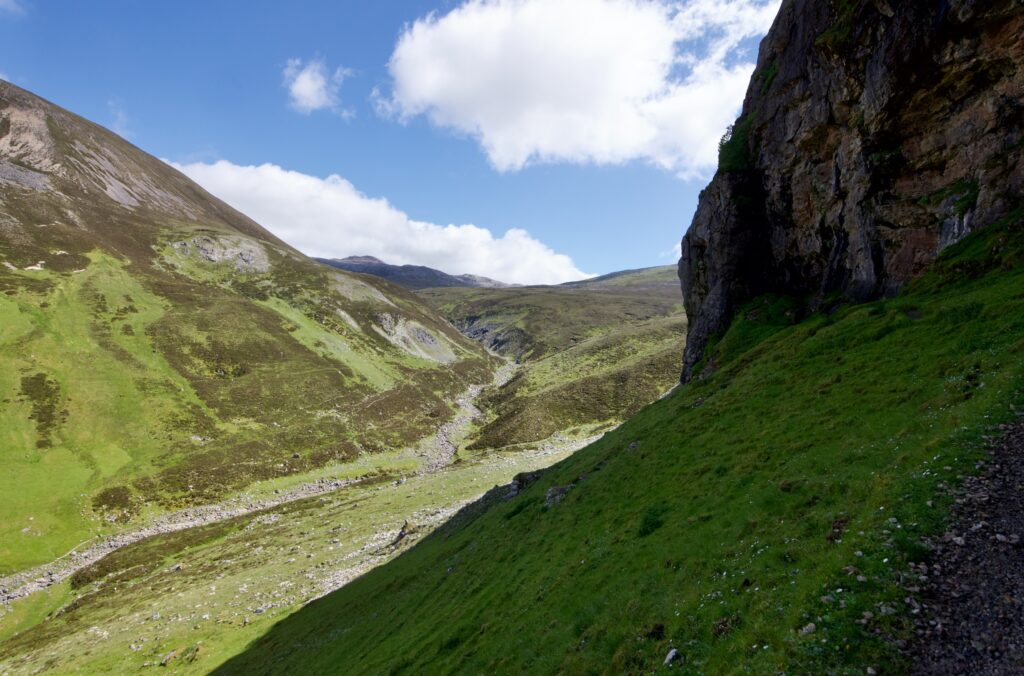
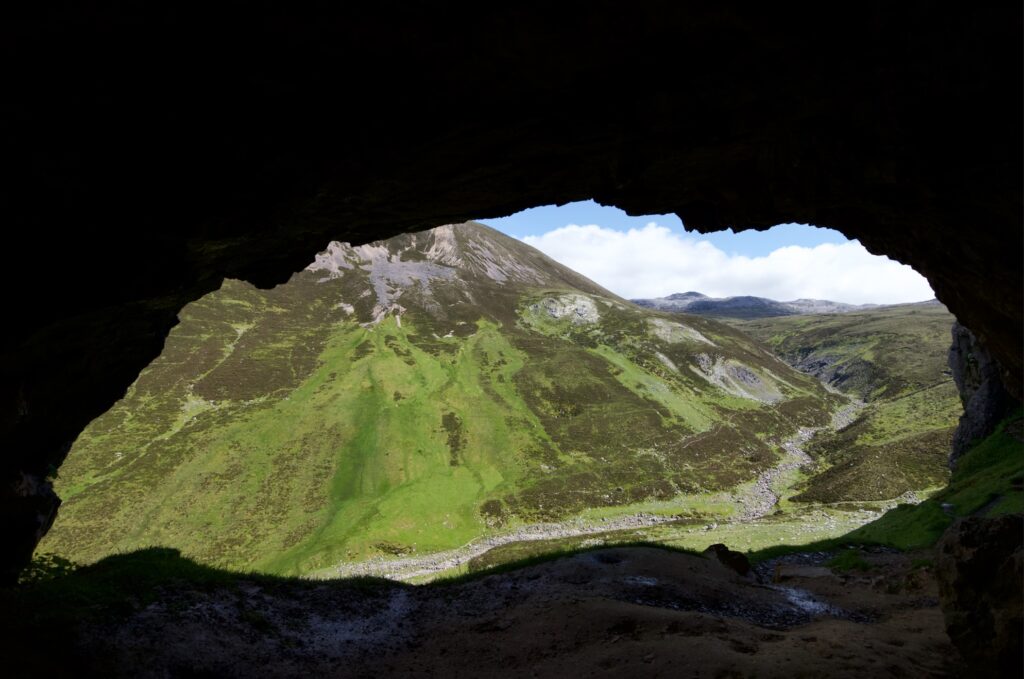
Looking towards Breabag
Over millennia, it seems that the caves also provided refuge for hibernating brown bears: individual remains have been dated to approximately 45,000, 26,000, 13,000 and 1,700 years ago. But recently, a second species of bear has entered the picture: in 2024, specimens of bears’ teeth dating back between 30,000 and 50,000 years were re-examined and found to indicate a diet rich in seafood, meaning that they could be from polar bears rather than brown bears. If polar bears were here, this is the first evidence of them to be found in Scotland.
The bones also included animals that are still present in Scotland: red and roe deer, badger, red and black grouse, pine marten and wildcat. For these to flourish, the glen must have been more wooded than it is now, with trees such as birch and willow.
But how did all these animals get here? Researchers have speculated that bones may have been washed into the caves by meltwater from glaciers; some animals may have died during hibernation, and others may have been the prey of large predators. But that’s still hard to equate with the number of bones present and the vast timespan that they encompass. Preserved in the sediment on the floor of the caves, they have survived in a kind of time capsule whose message is proving tricky to decipher.
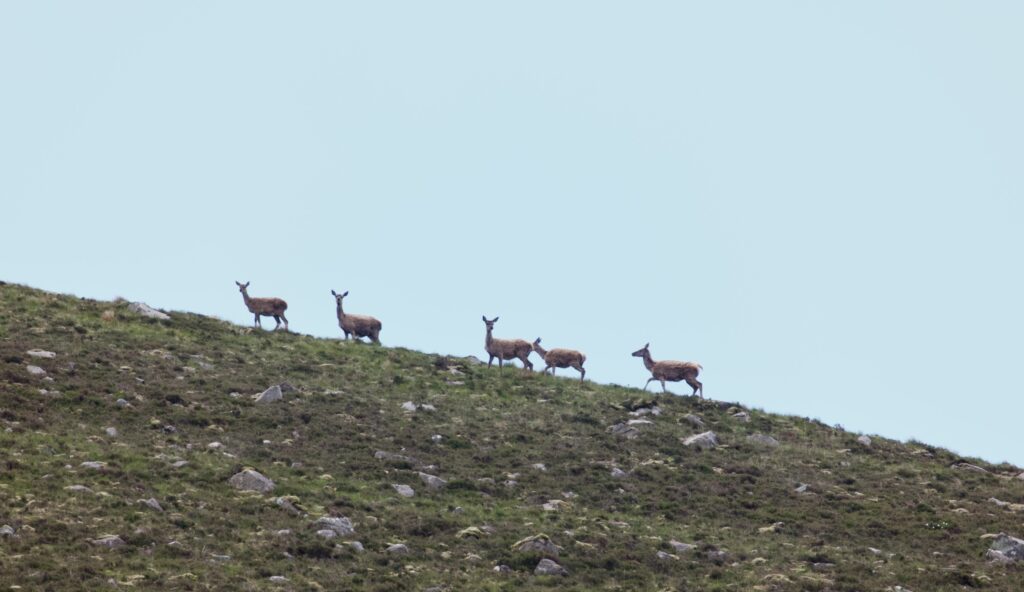
Red deer hinds on the horizon. Looking at them, I think of the Cailleach, goddess of winter, and her beloved herds of deer which roamed the hills under her protection.
While there is no evidence of humans living in the caves, it’s thought that they may have been used by hunters passing through the glen. A sign at the foot of the path says that the first people appeared here perhaps 8,000 years ago, and were likely on the trail of reindeer and bears. In one of the caves, human remains were found within a small stone enclosure, suggesting a burial, and a second burial was found towards the back of the cave, lightly covered with earth. In all, the bones of four people have been radiocarbon dated to between 4,515 and 4,720 years ago.
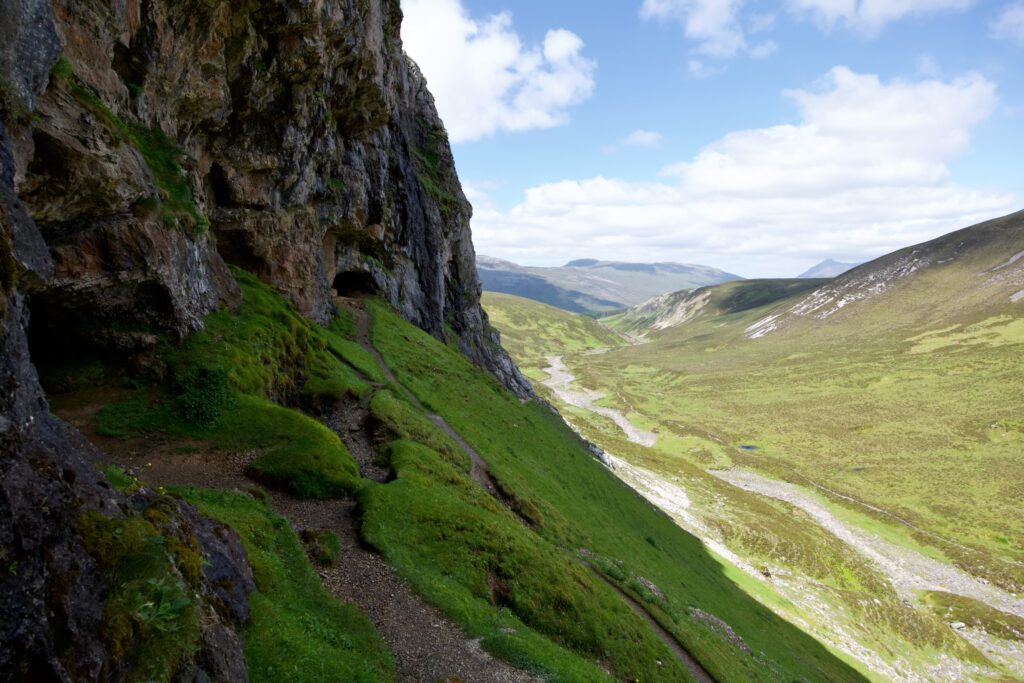
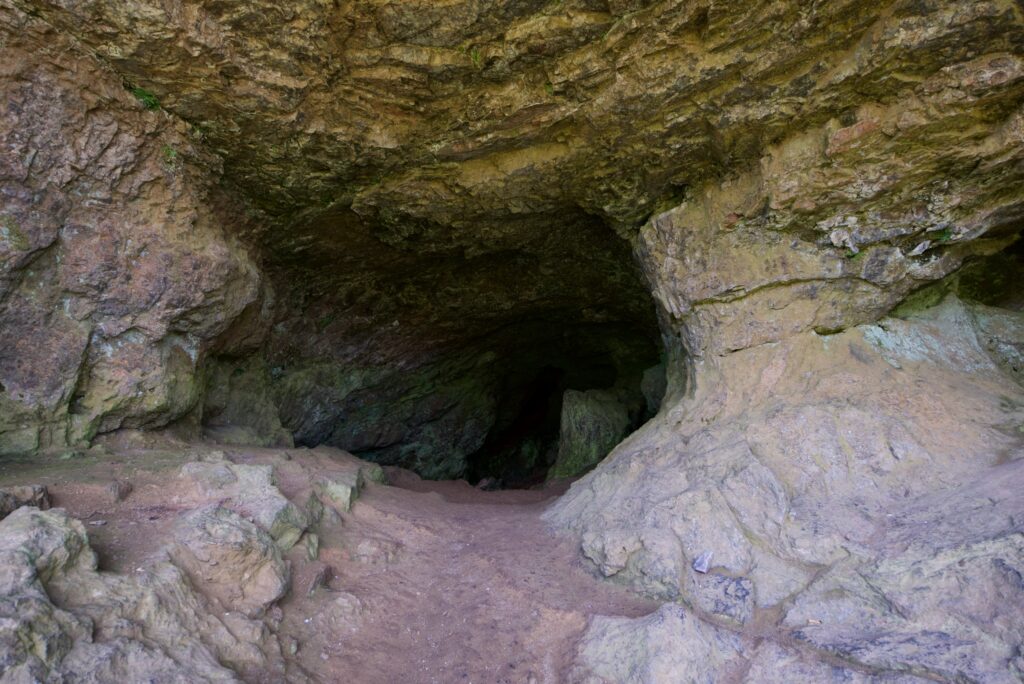
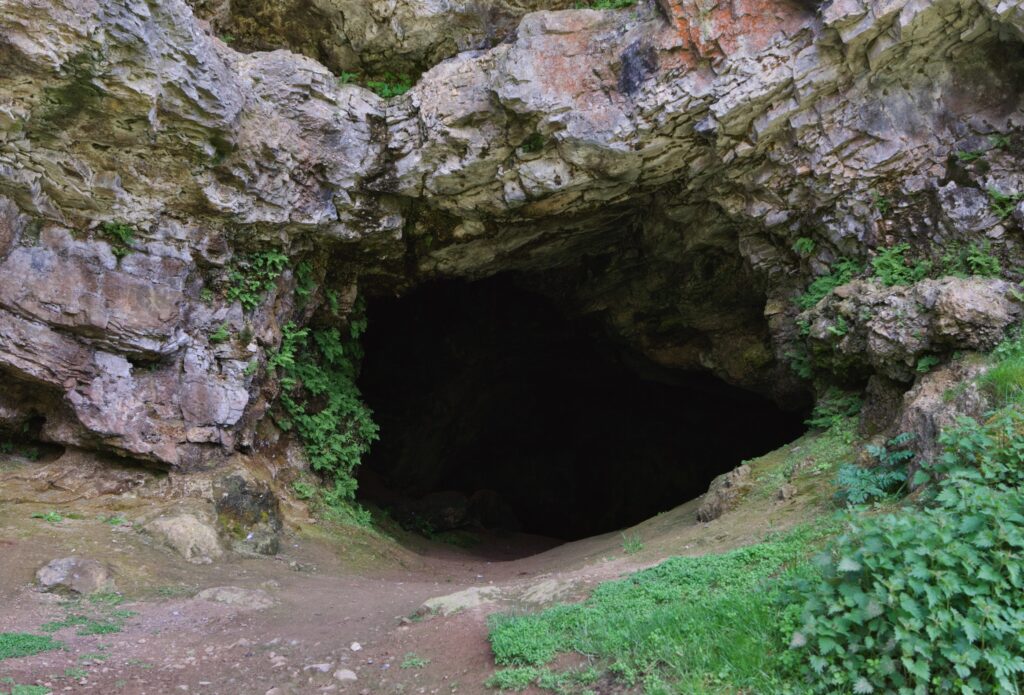
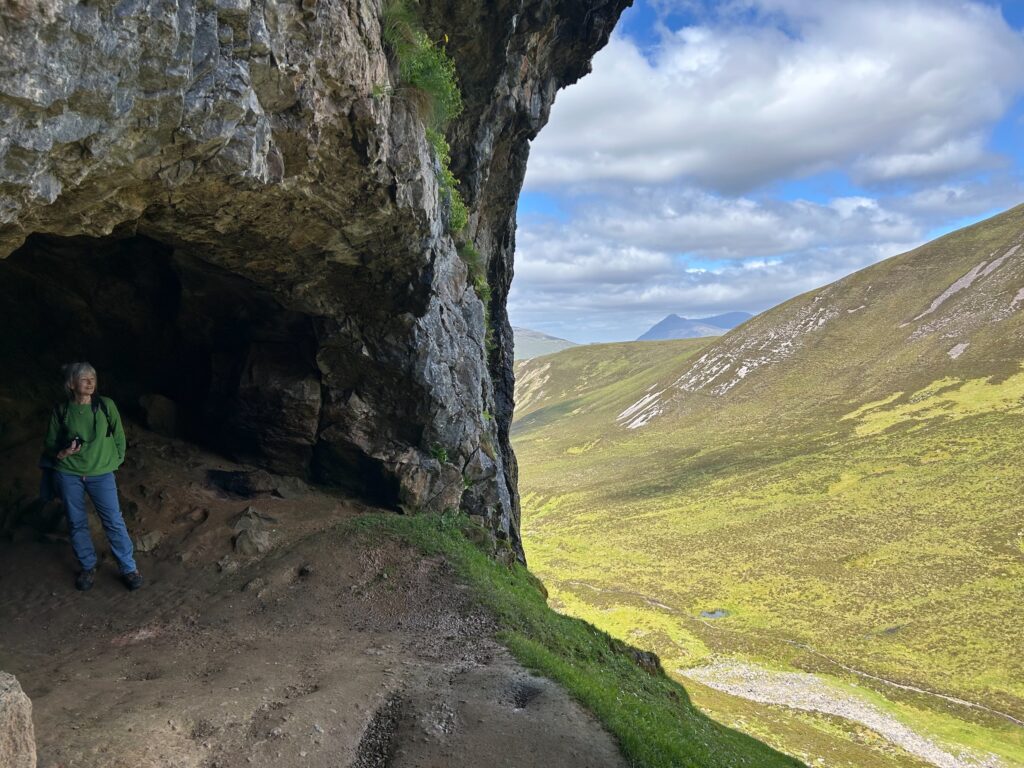
The day was getting warm, so it was good to enter the cool shadow of the cliffs that tower above the cave entrances. There are four caves here, and they’re quite big – you can stand up comfortably in most of them. They don’t appear to go back very far, although the middle two are connected by a low passage. The air inside smelled stale and musty, as if it was only a few days since the last bears had woken up from hibernation and ambled off down the hillside. Overhead, trickles of water were dripping constantly from the overhanging rocks. I found that holding up my phone to try and photograph them wasn’t a good idea, for several reasons.
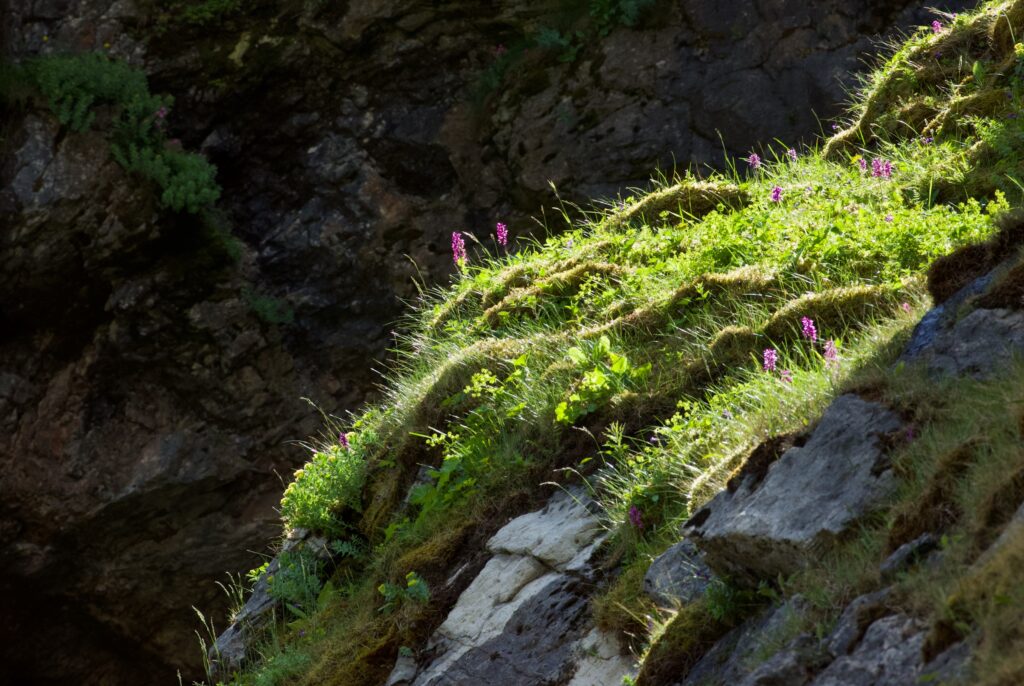
Early purple orchids
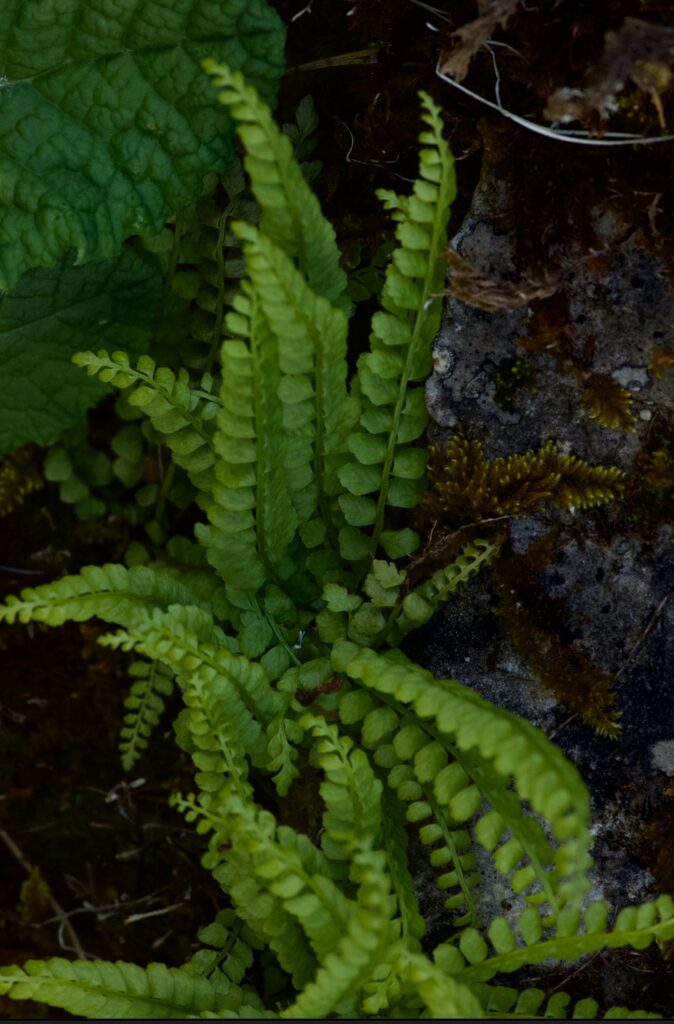
Spleenwort
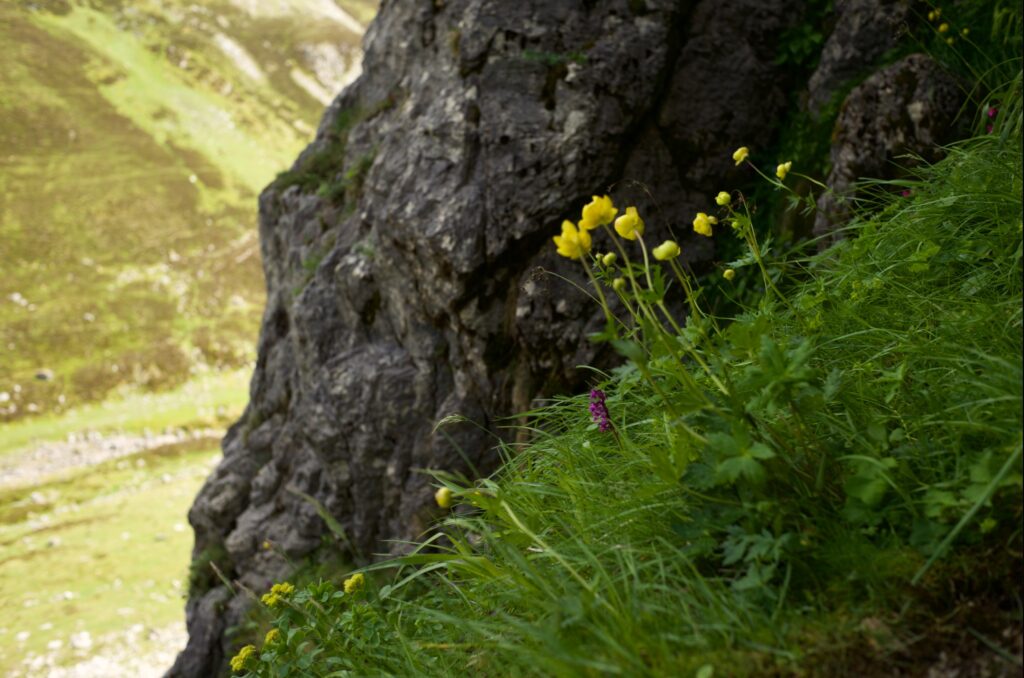
Globeflowers
We stayed there for an hour or so, examining plants that were growing on rocky ledges and gazing at the scree-covered hillsides opposite. Then we continued past the caves, following the path as it descends and then loops round to rejoin the stream-bed in the glen. A cuckoo called from the cliffs above and then took off, still shouting in defiance. Two deer hinds were feeding below some crags and stopped briefly to stare at us as we passed.
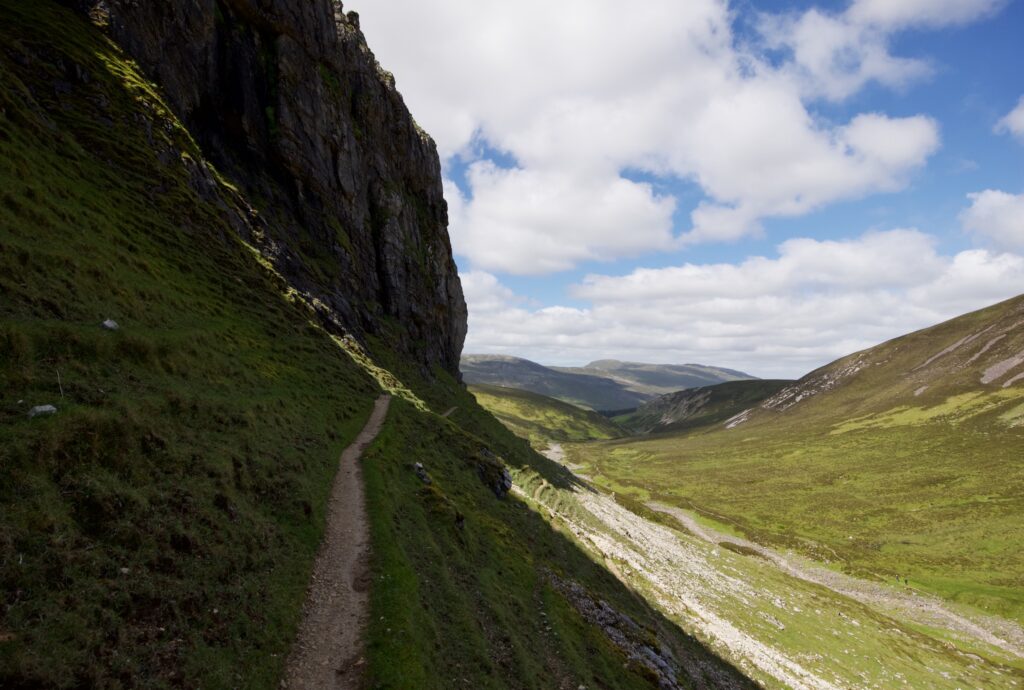
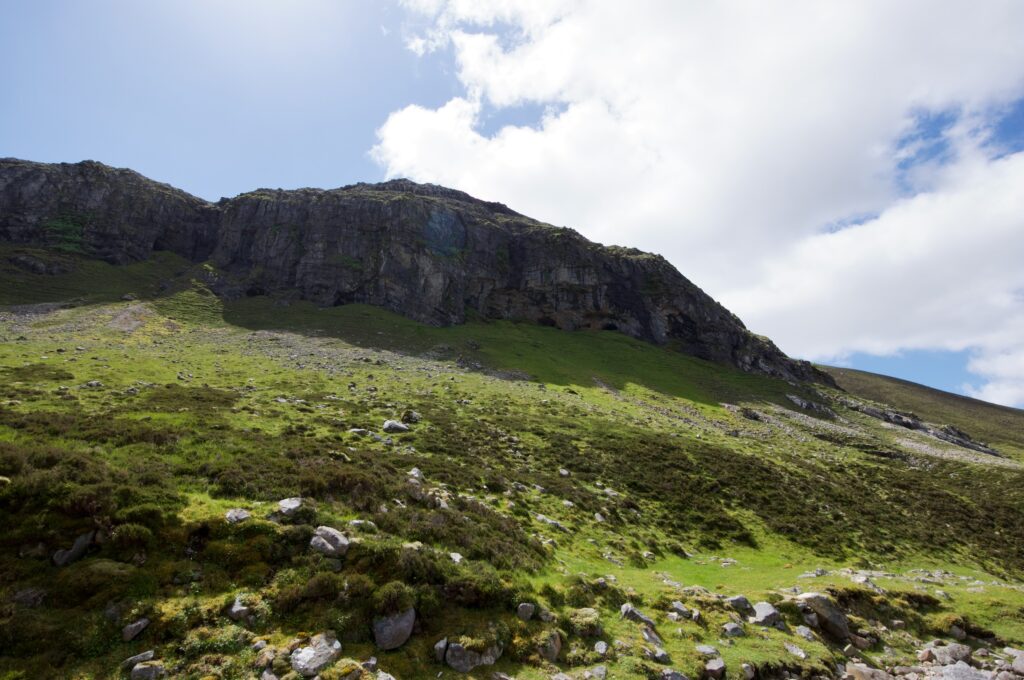
Looking up towards the line of caves
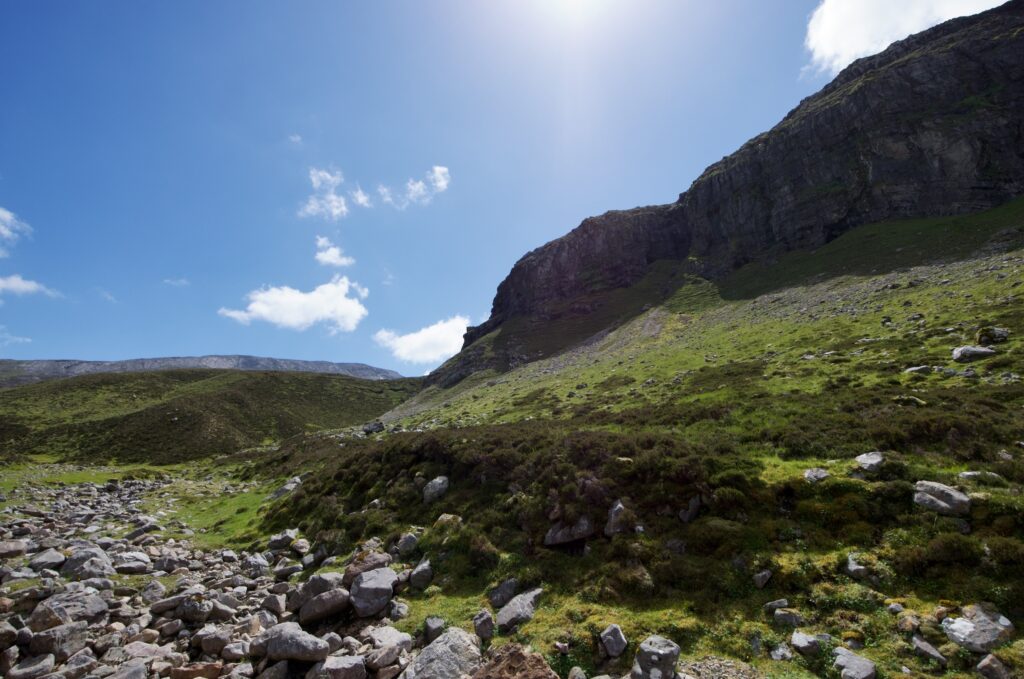
Back home, I got out Dougie Strang’s The Bone Cave and re-read his account of a night spent here, when he was awoken by a stag bellowing in the dark. Strang was on a quest to understand the age-old traditions of the Cailleach in the Highlands, and the stories of fairy-women who accompanied the hinds across the hills. It sounds as if the spirits of the hill were testing his nerve that night, playing with his imagination in the light of a flickering candle; but next morning he went up onto the far slopes and found the plants that the ice-age herds would have grazed on, and which still bear their name: reindeer lichen.
And looking out from the rock face, it’s not hard to imagine herds of reindeer moving across the high tops, mothers and their youngsters treading lightly over the loose scree, with patches of snow lying on the ground and remnants of glaciers in the valleys. But the humans who must have stood and watched them seemed so impossibly distant that I found it was easier to imagine a continuity in the wildlife that’s still there – the deer, the cuckoos, the pipits that sing over the moorland grass, the ferns that are flourishing in the damp shade and the bright heads of globeflower and mountain avens opening in the sun.
–
Reference
- Inchnadamph Explorers Lodge
- WalkHighlands
- ‘Inside Scotland’s ancient Bone Caves,’ BBC, 16 April 2024
- ‘To the Bone Caves and beyond’, Assynt Field Club, 26 May 2019
- Scottish Cave and Mine Database
- ‘Polar bears may have roamed ice age Scotland’, BBC, 29 November 2024
- ‘Fishy fossil find points to possible polar bear ancestry for Scottish bears’, University of Aberdeen, 28 November 2024
- SNH leaflet, Inchnadamph Bone Caves (PDF, undated, via National Library of Scotland)
- Scottish Geology Trust
- Alan McKirdy, John Gordon and Roger Crofts, Land of Mountain and Flood: The Geology and Landforms of Scotland (2007)
Photos copyright Colin and Jo Woolf


10 Comments
Bob Hay
One of your most fascinating essays ever Jo. Looks like those caves need a lot more exploration.
Apparently polar bears were originally brown and oddly enough many of their remains have been found in Ireland where their maternal line originated.
Jo Woolf
Thank you so much, Bob! That’s a huge compliment. This is one of the most extraordinary places we’ve been, and well worth the effort and planning involved in getting there. I didn’t know that about polar bears originally being brown. Nor did I know that the remains of bears found in Ireland were the maternal ancestors of modern polar bears. Thank you for this new wormhole! And yes, more discoveries could well be made at Inchnadamph, especially because there are believed to be caves below ground which have yet to be reached. Just watching a video of some cave-divers there made me feel claustrophobic.
Judy Hazen
What a beautiful description of your adventure and the photos are lovely. THANK YOU.
Jo Woolf
You’re very welcome Judy, and thank you for your lovely comment.
Deb Vallance
Beautifully evocative! Thank you.
Jo Woolf
Thank you so much, Deb – I’m very glad you enjoyed it.
davidoakesimages
Booked marked for a leisurely read…no doubt another great formative read. 😄
Jo Woolf
Thank you, David! I hope that you’ll enjoy it.
David Oakes
Just had a good read…much enjoyed. I know the area but never headed for the caves. One thing I found interesting was making a comparison with Derbyshire where I live (don’t laugh)…but we have vanishing rivers that head underground and bubble up further downstream. We also have Limestone Caves, some with wall paintings and some where bones were found. I also chuckle to myself as this area is known as the Peak District! I laugh because that is an over optimistic statement….nothing compared to Suilven, a great climb. Now waiting for the next Jo and Colin Expedition. 🙂
Jo Woolf
Glad to hear that, David! Thank you. I’ve never visited the limestone caves of the Peak District, although Colin has, many years ago. I hear it’s really beautiful. I didn’t know that there were wall paintings there too. I guess you’re right, that the name might be a bit misleading for someone expecting challenging summits! Some great walks, though, I’m sure.